Lawn
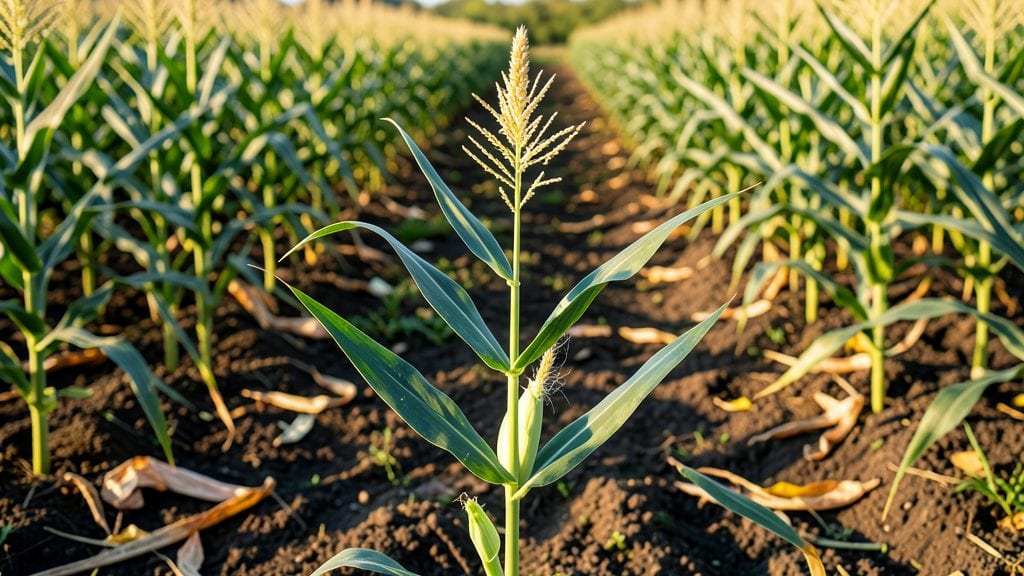
Growing maize from seed is one of those rewarding projects that turns a simple kernel into a towering, sun-loving giant in just 90 days. 🌱 I’ll never forget the first time I watched those first pale shoots push through the soil—it’s like magic, but with science and a little elbow grease.
The key isn’t just planting; it’s creating the perfect conditions for those seeds to burst into life, because maize loves warmth, space, and consistent moisture more than almost any other crop.
You’ll need well-draining soil rich in organic matter, a sunny spot with at least 6-8 hours of direct sunlight daily, and patience for the germination wait. Maize seeds germinate best when soil temperatures hit 60°F or higher, so don’t rush—wait until after your last frost date.
Plant seeds 1 inch deep and 6-12 inches apart, then water gently to settle the soil without disturbing them. The first few weeks are critical: keep the soil evenly moist but never soggy, and watch for those first green tips to emerge.
Once your stalks reach 6-12 inches tall, you’ll see the real transformation begin—broad leaves unfurling, tassels forming, and that unmistakable maize scent filling the air. With proper care, you’ll harvest ears in 3 months, and the payoff is worth every drop of water and hour of weeding.
The stalks themselves add dramatic height and texture to any garden, whether you’re growing for food or just the love of it.
Here’s the thing—maize thrives on neglect once established, but it demands attention early on. Common pitfalls include overcrowding, uneven watering, and not providing enough support for heavy ears. Between you and me, the biggest challenge is resisting the urge to harvest too soon—those kernels need time to plump up!
Let’s get those seeds in the ground and turn your garden into a summer cornfield.
📚 In This Guide
- What you need
- Instructions
- Tips and common mistakes
- Wrapping up and next steps
What you need
- ● Maize seeds: 1–2 lbs (or ~500–1,000 seeds, depending on desired plant density). Choose heirloom or hybrid varieties suited to your climate (e.g., 'Golden Bantam' for short seasons or 'Silver Queen' for sweetness).
- ● Soil: Well-draining, fertile loam with a pH of 6.0–7.5. Mix in 2–3 inches of compost or aged manure for nutrients.
- ● Water: Access to a drip irrigation system or hose with a gentle spray nozzle (maize needs 1–2 inches of water weekly).
- ● Fertilizer: Starter fertilizer: 10-10-10 or 5-10-10 (apply at planting).
- ● Growth fertilizer: Balanced 10-10-10 or organic options like fish emulsion or bone meal (side-dress at 6–8 weeks).
- ● Garden tools: Trowel or hoe (for planting and weeding).
- ● Rake (to level soil).
- ● Measuring tape (to space seeds 12–18 inches apart in rows 3 feet apart).
- ○ Planting aids (optional but helpful): Seedling trays or biodegradable pots (for indoor starts, if needed).
- ● Row covers or frost cloth (to protect young plants from temperatures below 50°F).
- ● Stakes or trellis (for tall varieties like 'Country Gentleman').
- ● Climate: Maize thrives in warm weather (70–90°F). Plant after the last frost when soil is at least 60°F.
- ● Sunlight: Full sun (6–8 hours daily). Partial shade may reduce yield.
- ● Space: Minimum 3 feet between rows and 12–18 inches between plants (adjust for dwarf varieties).
- ● Time: Dedicate 3–4 months from planting to harvest (varies by variety).
Step-by-Step instructions for growing maize from seed
Here’s how to coax sturdy maize stalks from kernels—no shortcuts, just reliable growth.
🌱 Step 1: Prepare the Planting Site for Optimal Germination
Maize thrives in warm, well-drained soil with full sun exposure—at least 6-8 hours daily. Choose a spot sheltered from strong winds, as young seedlings are fragile. Work the soil to a depth of 12 inches, incorporating 2-3 inches of compost into the top 6 inches to boost fertility. Maize roots need loose soil to penetrate easily, so avoid compacted or rocky ground.
Test soil moisture by squeezing a handful—it should hold together but not be sticky. If your soil drains poorly, mix in sand or perlite to improve aeration. The ideal planting temperature is 60-65°F, so wait until after the last frost when nighttime temps stay above 50°F. I always plant after Memorial Day in my zone to avoid cold snaps.
🌱 Step 2: Plant Kernels at the Correct Depth and Spacing
Use 4 kernels per hill, planted 1 inch deep and 6 inches apart in a square pattern. This ensures strong germination and easy thinning later. Space hills 3 feet apart in rows 3 feet apart—crowding weakens stalks and invites disease. I press each kernel into the soil with my thumb to ensure good soil-to-seed contact, then cover lightly with a thin layer of soil.
Water immediately after planting to settle the soil and trigger germination. Keep the soil consistently moist (not soggy) until seedlings emerge—usually 7-14 days. Avoid overhead watering once sprouts appear; instead, water at the base to prevent fungal diseases like damping-off, which can kill seedlings overnight.
☀️ Step 3: Thin Seedlings and Support Early Growth
Once seedlings reach 4-6 inches tall, thin to the strongest stalk per hill, removing weaker stems at the base. This reduces competition and directs energy into a single, robust plant. Maize grows quickly—expect 1-2 inches of growth per day in ideal conditions. Fertilize with a balanced 10-10-10 fertilizer when seedlings are 6 inches tall, applying ½ cup per hill to encourage strong root and stalk development.
Install stakes or trellises at planting if your variety is tall (like 10+ feet). I tie stalks loosely to supports with soft twine when they reach 3 feet to prevent lodging. Watch for corn borers—small holes in leaves or sawdust-like frass are early signs. Handpick eggs or use neem oil spray as a preventive measure.
💧 Step 4: Maintain Moisture and Fertility Through Pollination
Maize requires 1-1.5 inches of water weekly, more during tasseling (when pollen sheds). I water deeply 2-3 times per week, focusing on the root zone to avoid wetting foliage. Yellowing lower leaves signal underwatering, while wilting or brown tips mean overwatering. Fertilize again at tasseling with potassium-rich fertilizer (like 0-0-50) to support ear development.
The tassel (male flower) emerges first, followed by silks (female flower) 2-3 days later. Pollination is complete when silks turn brown—this is your cue to reduce watering slightly to prevent ear rot. Hand-pollinate if silks remain dry by brushing tassels gently over them on a calm morning.
⏰ Step 5: Harvest at Peak Maturity for Sweetest Kernels
Harvest when kernels are plump and milk-stage (squeeze a kernel—if it oozes milky liquid, it’s ready). For sweet corn, this is 18-22 days after silking. Cut stalks with a clean knife, leaving 2 inches of stem. I harvest in the early morning when sugars are highest, then blanch immediately for 3-4 minutes to preserve sweetness.
Dry ears for storage by hanging them in a well-ventilated, dark place for 2-3 weeks. Kernels are ready when they’re hard and dry to the touch. Store dried ears in paper bags in a cool, dry spot for up to 6 months. Save a few kernels for next season—their viability lasts 2-3 years if stored properly.
Tips & tricks for perfect maize growth from seed
Growing maize from seed rewards patience with robust, productive stalks—but only if you nail these key details.
Soil Temperature is Everything: The 60-65°F soil temperature range in Step 1 is non-negotiable for germination. I've seen kernels fail to sprout when planted too early, even if air temps seem warm. Use a soil thermometer to verify—if it's below 50°F at night, wait. For a head start, cover the planting area with clear plastic for a few days to warm the soil faster. This creates the ideal conditions for those 4 kernels per hill to germinate within the 7-14 day window.
Thinning Technique Matters: When you thin to the strongest stalk at 4-6 inches in Step 3, don't just yank—cut stems at the base with clean scissors. This prevents disturbing the roots of remaining plants. I've found that thinning in the morning gives plants time to recover before evening heat stress. The 1-2 inches of daily growth you'll see afterward proves how efficiently maize converts sunlight into energy once competition is removed.
Watering Strategy for Pollination: The 1-1.5 inches weekly guideline in Step 4 becomes critical during tasseling. I've learned the hard way that overwatering here causes ear rot—when silks turn brown, immediately reduce to ½ inch weekly until kernels harden. For hand-pollination, do it on calm mornings when humidity is low. The 2-3 day window between tassel emergence and silk appearance is your best chance for successful pollination.
Harvest Timing is an Art: That 3-4 minute blanch in Step 5 preserves sweetness, but timing is everything. I harvest at 7:30 AM when sugars are highest, then plunge immediately into ice water for exactly 3 minutes before blanching. For storage ears, hang them upside-down in a dark, well-ventilated space—this prevents mold while maintaining kernel viability for up to 2-3 years.
Pro Tips for Seed Of Maize
- Growing maize from seed rewards patience with robust, productive stalks—but only if you nail these key details.
- Soil Temperature is Everything: The 60-65°F soil temperature range in Step 1 is non-negotiable for germination. I've ...
- Thinning Technique Matters: When you thin to the strongest stalk at 4-6 inches in Step 3, don't just yank—cut stems a...
Frequently asked questions
Got questions about growing maize from seed? You’re not alone!
Whether you’re a first-time gardener or a seasoned grower, these answers will help you navigate the process with confidence.
How deep should I plant maize seeds?
Plant maize seeds about 1 to 1.5 inches deep in well-drained, warm soil (at least 60°F or 15°C). Deeper planting can delay germination, while shallow planting risks drying out. Use a seedling tray or small hills for better moisture retention.
How long does it take for maize seeds to germinate?
Under ideal conditions (warm soil, consistent moisture), maize seeds typically germinate in 7 to 14 days. If germination takes longer, check soil temperature—cold soil slows the process. Avoid overwatering, as soggy soil can cause rot.
Can I grow maize in containers instead of a garden bed?
Yes! Maize thrives in large containers (at least 12 inches deep and wide) with well-draining soil. Choose dwarf varieties like ‘Little Gem’ or ‘Tom Thumb’ for smaller spaces. Ensure the container gets 6+ hours of sunlight daily and use a balanced fertilizer every 3-4 weeks.
What pests should I watch for when growing maize?
Common maize pests include corn earworms, cutworms, and aphids. Use row covers early to deter flying insects, and handpick larger pests. For earworms, wrap silks with a paper bag to block entry. Neem oil or insecticidal soap can help for aphids.
How much sunlight does maize really need to grow?
Maize is a sun-worshipper—it needs full sun (6 to 8 hours daily) for optimal growth. Partial shade can reduce yields or lead to weak stalks. If your garden is shady, consider fast-maturing varieties or a raised bed in the sunniest spot.
Wrapping up and next steps
Growing maize from seed is a rewarding journey that connects you to nature’s bounty—and you’ve just mastered the first steps! 🌱 Whether you’re nurturing a backyard garden or a small plot, remember: patience, proper spacing, and a little TLC turn tiny kernels into towering stalks.
With your newfound knowledge, there’s no limit to what you can grow—so why stop at one stalk?
Ready to take the next step? Start small:
- Experiment with different varieties to find your favorite.
- Share your harvest with neighbors or preserve it for future planting.
- Expand your garden with companion plants like beans or squash!