
Pruning
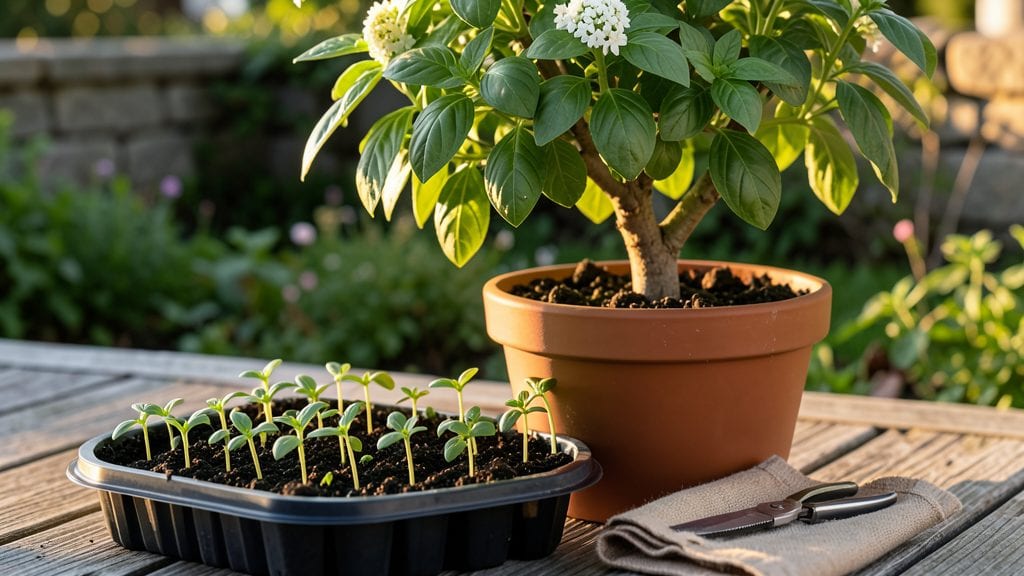
Growing tree basil from seeds can put fresh, fragrant leaves on your plate in just 10 days—no waiting months for transplants. I’ve grown this fast-growing herb from seed every spring, and the trick is keeping soil warm and moisture steady from day one.
The first true leaves appear shockingly quick once you crack the germination code.
You’ll need a sunny windowsill or grow light, a shallow tray with drainage, and a lightweight potting mix that stays moist but never soggy. Tree basil thrives in heat, so if your home runs cool, a heating mat speeds things up even more.
Most gardeners overwater at this stage—let the top inch dry between waterings to avoid damping off those delicate seedlings.
By the time you’re pinching back the first set of true leaves, you’ll have a bushy plant ready to transplant outdoors after frost. The flavor deepens as it grows, and with proper care, one seedling can produce harvests for months.
The key is consistent warmth and patience—those first leaves taste like nothing store-bought can match.
Works equally well in containers, raised beds, or in-ground plantings once established. Here’s how to keep them thriving through summer and even overwinter in mild climates—no green thumb required beyond keeping them happy and watered.
📚 In This Guide
- What you need
- Instructions
- Tips and common mistakes
- Wrapping up and next steps
What you need
- ● Tree basil seeds: 1 packet (typically 50-100 seeds). Look for Ocimum basilicum var. minimum or "spicy globe basil" for the classic tree basil variety.
- ● Seed-starting soil: 1 bag (1-2 quarts) of high-quality, sterile potting mix (avoid garden soil—it can harbor pests or diseases).
- ● Containers: 2-4 small pots (3-4 inches in diameter) or
- ● 1 long seed tray with individual cells (for better organization).
- ● Watering can or spray bottle: With a fine mist nozzle for gentle hydration.
- ● Plastic wrap or clear lid: To create a mini greenhouse effect and retain moisture.
- ● Grow lights or sunny windowsill: A south-facing window or a LED grow light (12-16 hours/day) for optimal growth.
- ○ Fertilizer (optional but helpful): A balanced liquid fertilizer (5-10-5 ratio) diluted to half-strength for seedlings.
- ● Tweezers or toothpick: For carefully placing tiny seeds into the soil.
- ○ Heat mat (optional): A seedling heat mat (70-75°F) can speed up germination by 2-3 days.
- ● Humidity dome or plastic cloche: Helps maintain moisture levels during germination.
- ● pH testing kit: Ensures your soil pH is between 6.0-7.0 (ideal for basil).
- ● Pruning shears: For trimming leggy seedlings later on.
- ● Label markers: To keep track of planting dates and varieties.
Step-by-Step instructions for growing tree basil from seeds
Here's how to get fast, vigorous tree basil seedlings ready for year-round harvests in just weeks.
Prepare Containers and Seed Starting Mix
Fill 4 small pots (at least 3 inches deep) with 2 gallons of seed starting mix. I press the mix down lightly to remove air pockets—this ensures even moisture and better root contact. The soil should feel like a damp sponge when squeezed; if it crumbles, add a little more water and mix again. Avoid garden soil, which can harbor diseases that kill delicate seedlings.
Place the pots in a warm spot (70-75°F) before sowing. Tree basil seeds germinate fastest in consistently warm soil, so I often set the pots on a seedling heat mat if my home runs cooler. This small investment speeds up germination from 7-10 days to just 3-5 days. Label each pot with the date and variety—tree basil grows tall, and you'll want to track its rapid progress.
Sow Seeds at the Right Depth
Plant 2 seeds per pot at a depth of just ¼ inch—any deeper and they’ll struggle to break through the soil. I use a toothpick to make a small hole, place the seeds inside, then cover them with a thin layer of mix. Press gently but don’t compact the soil; you want the seeds snug but not buried too deep. Moisten the surface with a spray bottle until the soil looks evenly damp.
Here’s the thing—tree basil seeds need warmth to germinate, so I cover the pots with clear plastic wrap to trap heat and moisture. This creates a mini greenhouse effect, and you’ll see tiny sprouts push through in as little as 3 days. Once the first seedlings appear, remove the plastic immediately to prevent mold. If you notice black spots or fuzzy growth, that’s damping-off—open the pots to air them out right away.
Provide Bright, Indirect Light
Move the pots to a south-facing window or under grow lights within 24 hours of germination. Tree basil seedlings need 12-14 hours of light daily to stay compact and strong. If your seedlings stretch toward the light with long, pale stems, they’re not getting enough—adjust the grow lights to 2-3 inches above the plants. You’ll see them perk up within a day or two.
Water gently from the bottom by placing the pots in 1 inch of water for 10 minutes. This method keeps the soil evenly moist without disturbing the delicate roots. Let the seedlings dry out slightly between waterings—you’ll know it’s time when the top ½ inch of soil feels dry to the touch. Overwatering is the fastest way to kill young basil; yellowing leaves mean you’re watering too much.
Thin and Support Seedlings
When seedlings reach 2 inches tall, thin to the strongest one per pot by snipping the weaker stem at the base with clean scissors. This might seem harsh, but crowded seedlings compete for nutrients and grow leggy. After thinning, add a small bamboo stake (about 4 inches tall) next to each plant. Tree basil grows 3-5 feet tall, so early support prevents flopping.
Fertilize lightly with ½ teaspoon of balanced fertilizer (10-10-10) mixed into the top ½ inch of soil. I wait until the plants have 4-6 true leaves before feeding—this prevents burning the tender roots. Keep the soil consistently moist but not soggy, and you’ll see new leaves emerge within 7-10 days. That’s your signal everything’s on track!
Tips & tricks for fast-germinating tree basil seeds
Fast germination is the key to getting your tree basil off to a strong start, and these tips will help you avoid common pitfalls while maximizing speed and success.
Warmth is Everything: The 70-75°F temperature range in Step 1 is non-negotiable for fast germination. If your home runs cooler, invest in a small seedling heat mat—it’s the single biggest factor in cutting germination time from 7-10 days to just 3-5 days. I place mine under the pots before sowing, and you’ll notice sprouts appearing in as little as 3 days with this setup.
Moisture Management Matters: When watering from the bottom for 10 minutes in Step 3, use room-temperature water to avoid shocking the delicate roots. The soil should feel like a damp sponge after this process—if water pools at the bottom, reduce the time slightly. Overwatering causes yellowing leaves and damping-off, which can kill seedlings before they even get started.
Light Positioning Secrets: For the 12-14 hours of daily light in Step 3, position your grow lights just 2-3 inches above the seedlings. If you notice them stretching toward the light with pale stems, they’re not getting enough intensity. Adjust the height every few days as they grow—this prevents leggy seedlings that flop over as they mature.
Thinning Strategy: When thinning to one seedling per pot at the 2-inch mark in Step 4, use clean scissors to avoid damaging the remaining plant. The key is to do this early—crowded seedlings compete for nutrients and grow weak. I find that removing the weaker seedling at this stage gives the stronger one room to develop into that 3-5 foot tall tree basil you’re aiming for.
Pro Tips for Tree Basil Seeds
- Fast germination is the key to getting your tree basil off to a strong start, and these tips will help you avoid common pitfalls while maximizing speed and success.
- Warmth is Everything: The 70-75°F temperature range in Step 1 is non-negotiable for fast germination.
- Moisture Management Matters: When watering from the bottom for 10 minutes in Step 3, use room-temperature water to avoid shocking the delicate roots.
Frequently asked questions
about growing tree basil from seeds—because every gardener deserves a little clarity!How long does it take for tree basil seeds to germinate?
Tree basil seeds typically sprout within 7–14 days when kept in warm (70–85°F), moist conditions. For faster results, pre-soak seeds for 4–6 hours or use a heat mat. Patience is key—some seeds may take up to 3 weeks, especially in cooler climates.
Can I grow tree basil indoors year-round?
Tree basil thrives indoors with 6+ hours of sunlight daily (a south-facing window or grow lights work). Use well-draining pots (6+ inches deep) and fertilize monthly with a balanced liquid fertilizer. Just watch for pests like spider mites—regular misting helps!
What’s the best alternative if my seeds don’t sprout?
If germination fails, try cuttings from a healthy tree basil plant (place stems in water for 1–2 weeks until roots form). You can also buy transplants from nurseries or opt for faster-germinating herbs like basil or cilantro as a temporary swap.
Why are my tree basil leaves turning yellow?
Yellowing leaves often signal overwatering (basil hates soggy roots!) or nutrient deficiency. Check soil moisture—water only when the top inch feels dry. For yellowing between veins, flush the soil with water to remove excess salts or fertilize lightly with a balanced formula.
Does tree basil need cold weather to thrive?
Tree basil is a tropical herb and struggles in frost (<32°F). If you live in a cold climate, grow it in containers and move indoors before temperatures drop. Overwintering indoors with bright light keeps it alive for years—just reduce watering slightly during dormancy.
Wrapping up and next steps
Growing tree basil seeds is a rewarding way to enjoy fresh, fast-growing herbs year-round with minimal effort! 🌱 Whether you're a seasoned gardener or just starting, these seeds offer a delicious and versatile addition to your kitchen—plus, their quick germination means you’ll taste success sooner than you think.
Ready to elevate your garden? Start with a small batch, experiment with containers, and soon you’ll be harvesting vibrant leaves for pesto, teas, or garnishes. Happy planting!