Blooming
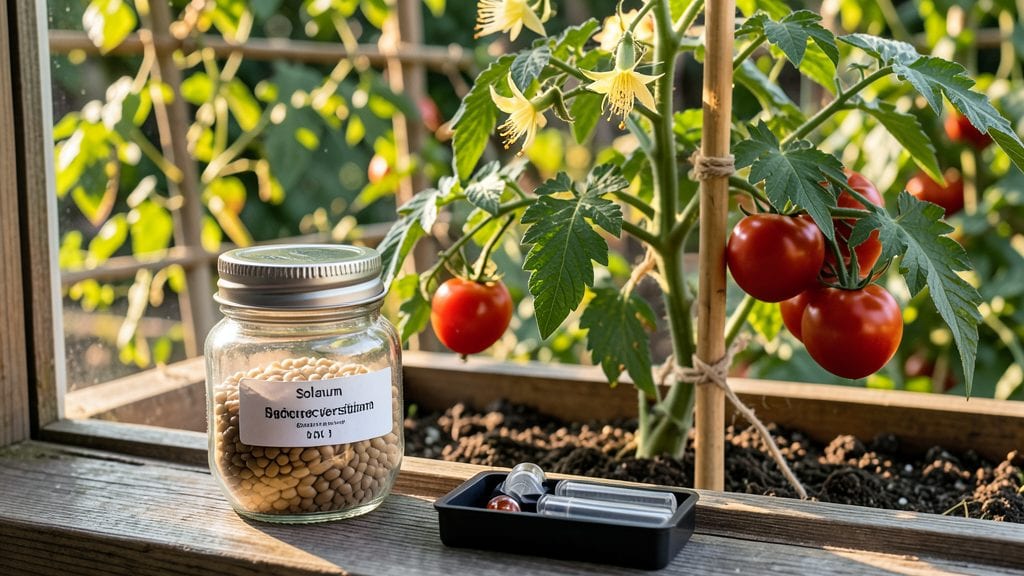
To determine how long tomato seeds stay viable, know they can last 3 to 5 years when stored properly, though their germination rates drop noticeably after 2 years. Keeping them dry in a cool, dark space preserves their potential, while exposure to moisture or heat speeds up their decline.
Understanding seed longevity helps gardeners plan ahead—especially when saving heirloom varieties.
The key to extending viability lies in minimizing moisture exposure, as even slight dampness triggers mold growth and enzymatic breakdown. 🌱 I’ve found that storing seeds in sealed envelopes with silica gel packets works wonders for maintaining their freshness, while refrigeration can push that 5-year window even further for serious seed savers.
What’s fascinating is how temperature plays a hidden role: seeds stored above 40°F degrade faster due to increased metabolic activity, while freezing (32°F or below) can actually preserve them longer than room temperature.
For best results, I recommend testing a small batch annually—simply place 10 seeds on damp paper towels to check germination rates before committing to a full planting.
💡 In This Article
- Factors Affecting Tomato Seed Viability Over Time
- Best Practices for Storing Tomato Seeds Long-Term
Factors affecting tomato seed viability over time
Here's what's actually happening inside those tiny seeds: viability declines primarily due to two biological processes—enzymatic degradation and cellular membrane breakdown. When seeds absorb even trace amounts of moisture (above 10% humidity), enzymes like lipases and proteases activate, breaking down essential fats and proteins that sustain the embryo.
This chemical erosion happens gradually at room temperature but accelerates dramatically when seeds exceed 77°F, where metabolic activity spikes by up to 30%. 🔥
The oxygen exposure factor is often overlooked but critical: seeds need minimal oxygen to survive, yet too much triggers oxidative stress that damages DNA and cell structures.
This is why paper envelopes (which allow slight air exchange) outperform completely airtight containers—modern seed banks use 0.5% oxygen environments to preserve viability beyond 10 years.
Temperature thresholds matter too: seeds stored between 32-41°F maintain 90%+ germination rates after 5 years, while those at 75°F drop to 50% viability in just 2 years.
Heirloom seeds typically outlast hybrids by 1-2 years because their thicker seed coats provide natural protection against moisture penetration. For example, a Brandywine heirloom seed might retain 75% viability after 6 years, while a commercial hybrid like Celebrity drops below 50% by year 4.
The difference comes down to genetic stability—hybrids often have thinner seed coats optimized for commercial production rather than longevity. What most people don't realize is that even properly stored seeds lose 5-10% viability annually, meaning a 5-year-old seed's germination rate could be only 60% of its original potential.
Moisture sensitivity explains why seeds stored in airtight containers with silica gel packets can last decades—these conditions create a 0-5% humidity environment that halts enzymatic activity.
The science here involves water activity (aw): seeds need aw below 0.3 to remain dormant, while anything above 0.6 triggers metabolic awakening and rapid deterioration.
This is why seeds left in plastic bags (which trap moisture) often fail to germinate after just 1-2 years, even if stored in the fridge.
Testing viability becomes crucial after year 3: place 10 seeds on damp paper towels at 70°F for 7-10 days. Count how many sprout—each 10% drop below the original germination rate represents roughly 1 year of storage life.
For example, if your 3-year-old seeds only show 60% germination, they've effectively aged 4-5 years in terms of biological age. This simple test reveals why professional seed banks use electrolyte leakage tests to measure membrane integrity at the cellular level.
One surprising nuance: seeds from cherry tomatoes often have slightly shorter viability (2-3 years) compared to beefsteak varieties because their smaller size means proportionally more surface area for moisture absorption.
The lesson here is that seed size matters—larger seeds with thicker coats (like Beefmaster varieties) can maintain viability up to 7 years under ideal conditions, while tiny grape tomato seeds may only last 2-3 years.
This biological variation explains why seed catalogs often specify "best used within 2 years" for smaller varieties.