
Advice
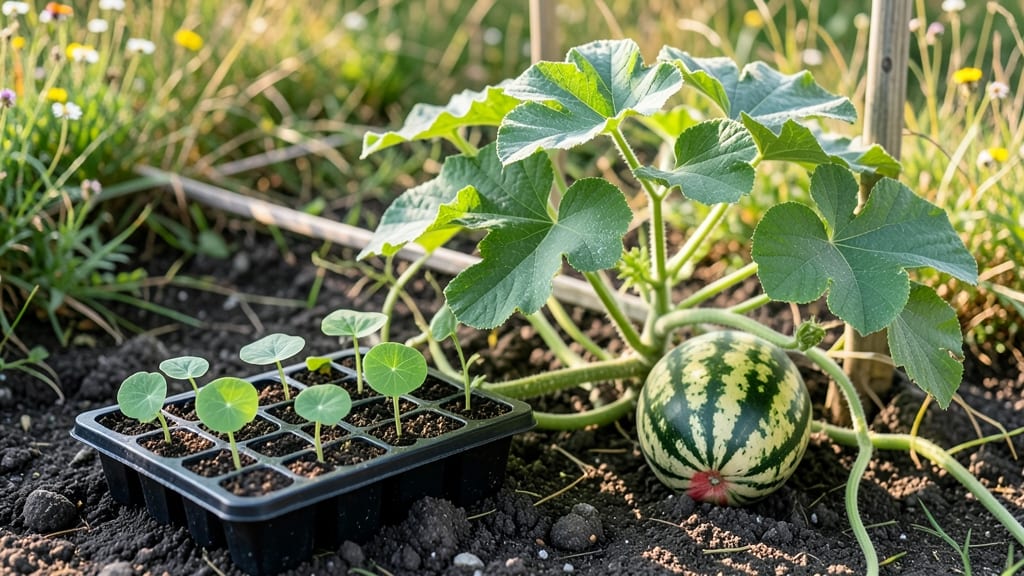
You can grow watermelons from the seeds inside store-bought fruit, but success depends on warm soil, full sunlight, and steady watering. Harvest the flat, dark seeds, plant them 1 inch deep after the last frost, and prepare for sprawling vines that need 6-10 feet of space to produce ripe melons in 70-90 days.
Store-bought watermelon seeds often come from hybrid varieties bred for sweetness and size, which may not match heirloom traits. 🌱 The key to germination lies in consistent moisture and temperatures above 70°F—think of it like creating a mini tropical environment.
I’ve found that planting seeds directly in the garden after frost (rather than starting indoors) works best for most gardeners, as watermelons dislike transplanting.
Once established, these vines thrive with 6-8 hours of sunlight daily and well-draining soil with a pH of 6.0-6.8—similar to what you’d find in a well-maintained backyard garden bed.
💡 In This Article
- Watermelon Seed Germination and Growth Science
- Step-by-Step Guide to Planting Watermelon Seeds
Watermelon seed germination and growth science
Watermelon seeds begin their journey through a precise biological process called germination, where the seed absorbs moisture and swells, activating enzymes that break down stored nutrients. The ideal temperature range for germination is 70-90°F, mimicking the warm conditions of their native tropical environments.
Oxygen is equally critical—seeds planted too deeply suffocate, while proper aeration in loose, well-draining soil allows roots to emerge within 7-14 days. This process is why spring planting (after last frost) works best in most climates.
The flat, dark seeds you save from store-bought watermelons are typically hybrid varieties, which means their offspring may not replicate the parent plant's exact traits. Hybrid seeds often produce smaller fruits or inconsistent flavors because they're bred for uniformity in grocery stores, not gardening performance.
For reliable results, gardeners often opt for heirloom seeds, which maintain stable characteristics across generations. The soil's pH also plays a role—watermelons thrive in slightly acidic to neutral soil (6.0-6.8), where nutrients like nitrogen and potassium become more available to developing vines.
Once germination succeeds, watermelon vines develop through a process called hypocotyl elongation, where the seedling's stem rapidly grows upward while roots anchor below. These vines can sprawl 6-10 feet in a single season, producing tendrils that help them climb or spread across the ground.
The plant's growth rate accelerates with 6-8 hours of direct sunlight daily, which triggers photosynthesis—the process that converts light into energy for fruit development. Without sufficient light, vines grow leggy and produce smaller, less sweet melons.
What most gardeners don't realize is that watermelon seeds contain natural growth inhibitors that must be overcome before sprouting. Soaking seeds in warm water for 12-24 hours before planting can help break dormancy, especially for older seeds.
The vines' rapid growth also demands consistent moisture—drought stress during flowering can cause blossoms to drop before fruiting. This is why mulching around plants helps retain soil moisture and regulate temperature, creating optimal conditions for both germination and fruit maturation.
Here's what's actually happening underground: As roots penetrate the soil, they release enzymes that break down organic matter, creating a nutrient-rich zone around the plant. This symbiotic relationship with soil microbes enhances nutrient uptake, particularly phosphorus and potassium, which are essential for watermelon development.
The plant's extensive root system also helps it access water from deeper soil layers during dry periods, a crucial adaptation for surviving in warm climates where evaporation rates are high.
For those growing watermelons in containers, the science gets even more interesting. The limited soil volume forces roots to grow in a dense network, which can actually increase nutrient uptake efficiency—though it also means plants need more frequent watering.
In ground plantings, roots can spread 3-4 feet wide, while container-grown roots stay compact but still require 5-gallon pots minimum per plant. This spatial constraint is why container watermelons often produce smaller fruits unless you choose compact varieties specifically bred for limited space.