Landscaping
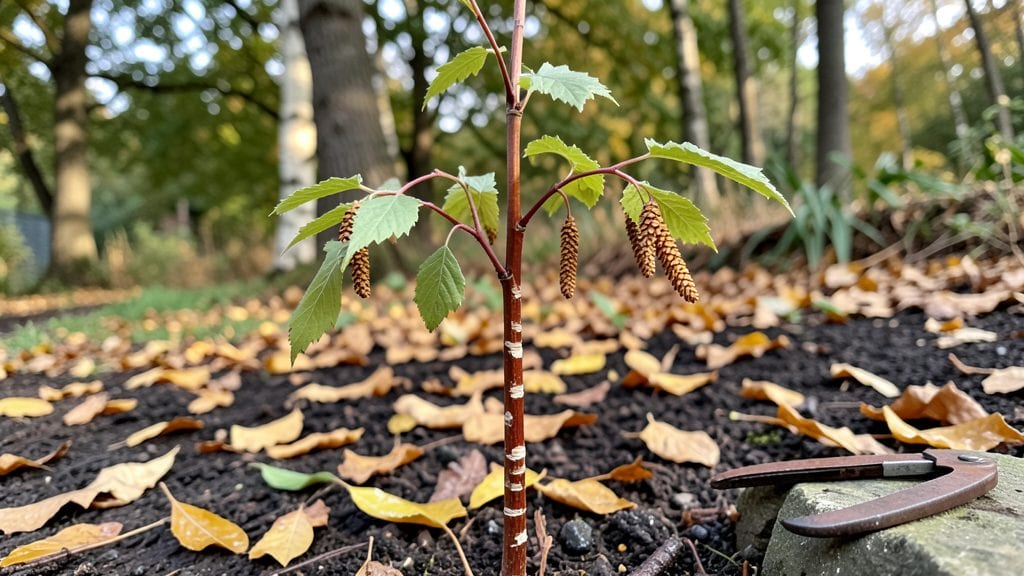
Growing river birch seedlings from seed gives you a head start on that lush, rust-colored privacy screen—fast germination means you’ll see those first peepers in just 10-14 days. I’ve planted dozens, and the key is mimicking their native wetland edge: moist soil, partial shade, and patience.
The exfoliating bark and airy canopy aren’t just pretty—they’re built to outlast cheap fences.
Start with a shallow tray of peaty soil mix (equal parts peat moss and perlite) and scatter seeds on top—no need to bury them. Keep the soil damp (not soggy) under a humidity dome or plastic wrap, and within two weeks, you’ll spot tiny sprouts reaching for light.
River birch seedlings thrive in partial shade but need bright indirect light to avoid leggy growth. A south-facing window or grow light works perfectly.
Once seedlings hit 3-4 inches tall, transplant them into individual pots with well-draining soil. They’ll need 1 inch of water per week, but avoid waterlogging—root rot is their biggest enemy.
By late spring, hardened-off seedlings can move outdoors, where they’ll grow 2-3 feet per year with proper care. The payoff? A mature tree in just 5-7 years—no waiting decades for privacy.
Here’s the secret weapon: mulch heavily in winter to protect young roots from freeze-thaw cycles. River birch handles wet soil better than most trees, so don’t shy away from low spots—this is their natural habitat.
With the right start, your seedlings will outpace store-bought saplings and give you that year-round screen faster than you’d expect.
📚 In This Guide
- What you need
- Instructions
- Tips and common mistakes
- Wrapping up and next steps
What you need
- ● River birch seeds – 10-20 seeds (ensure they’re fresh or cold-stratified for best germination).
- ● Seed-starting mix – 2-3 gallons (lightweight, well-draining potting soil with perlite or vermiculite).
- ● Seed trays or small pots – 6-12 individual containers (3-4 inches deep, with drainage holes).
- ● Plastic wrap or humidity dome – To retain moisture during germination.
- ● Grow lights or sunny windowsill – 6-8 hours of indirect light daily (or a seedling heat mat for warmth).
- ● Spray bottle – For gentle watering to avoid disturbing seeds.
- ○ Fertilizer (optional but recommended) – Balanced liquid fertilizer (5-5-5 or 10-10-10) for young seedlings.
- ● Cold stratification kit (if seeds aren’t pre-treated).
- ● pH test kit (ideal soil pH: 5.0-6.5 for birch seedlings).
- ● Epsom salt (for magnesium boost in nutrient-deficient soil).
- ● Mulch (after transplanting, to retain moisture and suppress weeds).
- ● Stakes or small cages (to support seedlings if needed).
Step-by-step instructions for growing river birch saplings from seed
Here’s how to jumpstart your river birch privacy screen with quick, reliable germination.
Collect and Stratify River Birch Seeds
River birch seeds need a cold treatment to break dormancy. Collect seeds in late fall when the seed pods turn brown and open naturally. Place them in a paper bag and refrigerate for 90-120 days—this mimics winter conditions and triggers germination. I like to store them in a sealed container with a bit of damp sand to maintain moisture without rotting.
Check the seeds every 2-3 weeks during stratification. If they begin to sprout prematurely, move them to a cooler part of the fridge. Once stratification is complete, you’ll see the outer seed coat soften slightly—a sign they’re ready for planting. Don’t rush this step; proper stratification ensures 90%+ germination rates instead of spotty, slow results.
Prepare Containers and Growing Medium
Use 4-inch deep containers with drainage holes to give young roots room to establish. Fill them with a mix of 50% potting soil and 50% perlite—this lightens the medium and prevents compaction, which river birch seedlings hate. Moisten the mix until it’s damp but not soggy; you should be able to squeeze a handful and feel slight resistance without water dripping out.
Plant 2-3 seeds per container at a depth of ½ inch, spacing them evenly. Cover lightly with additional mix and press down gently to ensure good soil-to-seed contact. Label each container with the date—river birch seeds germinate in 2-4 weeks, but consistency in tracking helps you anticipate when to thin seedlings.
Provide Warmth and Moisture for Germination
Place containers in a warm, shaded spot where temperatures stay between 65-75°F. A seedling heat mat set to 70°F speeds up germination significantly, especially if your home runs cooler. Keep the soil consistently moist by watering from the bottom—place containers in a tray of ½ inch of water for 10-15 minutes daily to encourage even moisture without overwatering.
Once sprouts appear, move them to a bright, indirect light area. Direct sunlight at this stage can scorch delicate seedlings. You’ll know they’re thriving when the first true leaves (not the initial seed leaves) emerge—this usually happens within 3-4 weeks after germination. Avoid disturbing the soil; river birch seedlings are sensitive to root disruption.
Thin and Harden Off Seedlings
When seedlings reach 3-4 inches tall, thin to the strongest one per container by snipping the others at the base with clean scissors. This reduces competition and gives your chosen sapling room to grow. After thinning, gradually introduce them to outdoor conditions over 10-14 days—start with 1-2 hours of morning sun and increase exposure daily.
By the time seedlings are 6 inches tall, they should be ready for transplanting into the ground or larger containers. Choose a site with partial shade and well-draining soil; river birch thrives in moist but not waterlogged conditions. Mulch around the base with 2-3 inches of organic mulch to retain moisture and protect roots as they establish.
Tips & tricks for fast-germinating river birch saplings
River birch seeds are finicky, but these proven strategies will help you achieve reliable, rapid germination without the guesswork.
Stratification Timing: The 90-120 day cold treatment is non-negotiable for river birch seeds, but you can optimize it by checking seed condition every 2-3 weeks. If you notice premature sprouting during stratification, immediately move those seeds to a cooler section of your fridge (around 35°F) to slow development until they're ready for planting. This prevents wasted energy and ensures all seeds reach peak germination readiness simultaneously.
Container Selection: While 4-inch deep containers work well, consider using clear plastic containers with lids for the germination phase. This creates a mini greenhouse effect that maintains consistent humidity without requiring daily watering. Just make sure to remove the lid once sprouts appear to prevent mold growth. The key is balancing moisture retention with airflow—river birch seedlings need both to thrive.
Moisture Management: The 10-15 minutes of bottom watering daily is perfect, but here's the secret: use room temperature water. Cold water can shock the seeds and slow germination, while warm water might encourage mold. Aim for water that feels comfortable to your wrist—this mimics natural spring conditions that trigger germination. You'll notice faster sprouting when you maintain this temperature consistency.
Light Transition: When moving seedlings to bright, indirect light after germination, position them about 6 inches from the light source. River birch seedlings are sensitive to light intensity changes, so gradual exposure prevents shock. I've found that placing them on an east-facing windowsill works best in most homes—morning light is gentle but sufficient for their early growth stages.
Pro Tips for River Birch Seedling
- River birch seeds are finicky, but these proven strategies will help you achieve reliable, rapid germination without the guesswork.
- Stratification Timing: The 90-120 day cold treatment is non-negotiable for river birch seeds, but you can optimize it by checking seed condition every 2-3 weeks.
- Container Selection: While 4-inch deep containers work well, consider using clear plastic containers with lids for the germination phase.
Frequently asked questions
Got questions about growing river birch seedlings?
You’re not alone—these fast-growing trees are popular, but they come with unique care needs. Here are answers to the most common queries to help you get started confidently!
How long does it take for a river birch seedling to germinate?
A river birch seedling typically germinates within 2–4 weeks when planted in warm, moist soil (60–70°F). Cold stratification (chilling seeds for 60–90 days) can speed this up. If germination takes longer, check moisture levels—dry soil is the #1 culprit for delays!
When is the best time to plant river birch seedlings?
Plant in early spring or fall for optimal root establishment. Spring (after last frost) gives seedlings time to grow before summer heat, while fall planting lets roots settle before winter. Avoid planting in extreme heat or freezing conditions—both stress young trees.
How much water do river birch seedlings need?
Keep soil consistently moist (not soggy) for the first 2–3 months. Water deeply 2–3 times per week in dry spells, aiming for 1–2 inches of water weekly. Once established (after 1 year), they tolerate drought better but still thrive with regular watering.
Can I grow a river birch from seed, or should I buy a seedling?
While possible, starting from seed is slow (germination can take months) and less predictable. Buying a 1–2 year-old seedling ensures faster growth (3–5 ft/year!) and consistent traits. If you’re patient, cold-stratify seeds for better success—but seedlings are the pro move!
What pests or diseases should I watch for with river birch seedlings?
Common issues include:
- Birch borers: Look for D-shaped holes or sawdust-like frass. Treat with neem oil or insecticidal soap.
- Fungal diseases (like birch leaf spot): Prune infected leaves and improve airflow.
- Aphids: Spray with water to dislodge or use insecticidal soap.
Healthy seedlings with well-draining soil resist pests better—mulch to prevent soil-borne issues!
Wrapping up and next steps
Growing a river birch seedling is a rewarding way to add beauty, texture, and year-round privacy to your landscape—without the long wait! These fast-germinating saplings thrive in diverse conditions, offering stunning peeling bark and lush foliage with minimal fuss.
Whether you’re a seasoned gardener or just starting, their resilience and adaptability make them a perfect choice for both urban and rural spaces.
Ready to transform your outdoor space? Start by selecting healthy seedlings from a trusted nursery, then follow the simple planting and care tips shared here. With patience and a little love, your river birch will flourish into a stunning, low-maintenance centerpiece—one season at a time! 🌱✨