Trees
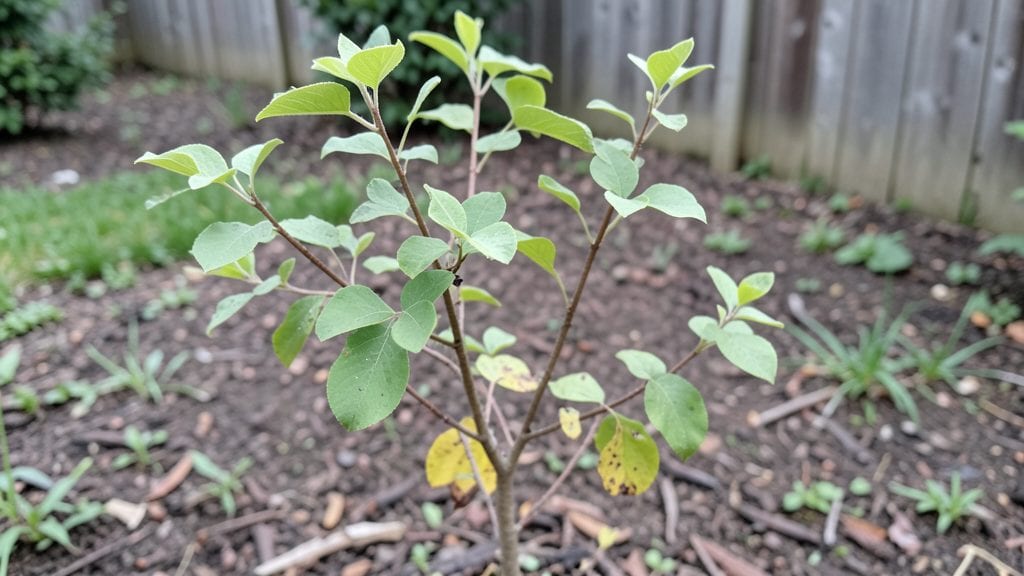
The identification of a redbud seedling begins with its heart-shaped leaves and delicate pink blooms that appear before the foliage—clues I’ve honed over years of watching these trees grow into spring’s most breathtaking displays. know what to look for.
The leaves are smooth-edged with a slightly pointed tip, and the bark on young stems has a fine, peeling texture that sets them apart from similar trees.
The real game-changer is the bloom timing—redbuds burst into color weeks before leaves unfurl, creating a breathtaking contrast. If you’re comparing seedlings, check for these traits: leaf veins that curve gently toward the tip and a growth habit that’s upright but flexible.
Confusing them with dogwoods? Look closer—the redbud’s leaves are more rounded and lack the dogwood’s serrated edges.
Once you’ve confirmed the ID, nurturing these seedlings is straightforward. They thrive in partial shade with well-draining soil, and a light mulch layer helps retain moisture while protecting young roots.
With proper care, you’ll see those iconic pink clusters in just a few years, turning your garden into a springtime highlight. The key is acting fast—young redbuds establish quickly when given the right conditions.
This method works for gardeners in zones 4-9, though timing varies slightly by region. Whether you’re starting from seed or transplanting a nursery-grown sapling, these traits will help you spot a redbud before anyone else in the neighborhood. Let’s get those seedlings identified and growing strong!
Mistaking Seedlings For Other Trees
Identifying redbud seedlings can be tricky—especially when they resemble other young trees. Misidentification often stems from visual similarities in early growth stages or lack of familiarity with key traits. Here’s why confusion happens and how to avoid it:
Young redbud seedlings (Cercis canadensis) often have leaves that mimic those of:
- Black Locust (Robinia pseudoacacia): Both can have heart-shaped leaves, but black locust leaves are usually smaller, smoother, and lack the fuzzy texture of redbud’s silvery undersides.
- Honey Locust (Gleditsia triacanthos): Early leaves may appear similar, but honey locust seedlings grow compound leaves (multiple leaflets) rather than the single, simple leaf of a redbud.
- Eastern Redbud (Cercis canadensis vs. Cercis canadensis var. texensis): Texas redbud seedlings have narrower, more elongated leaves compared to the broader, rounded leaves of the common redbud.
Why it happens: Seedlings prioritize rapid leaf development over distinct traits, making early identification harder. Solution: Wait until leaves fully mature (3–5 months) or check for leaf arrangement (alternate vs. opposite)—redbuds are alternate.
Thin redbud seedlings (under 1 inch in diameter) often have bark that looks like:
- Smooth Bark Mistaken for Willow (Salix spp.): Young redbud bark is silvery-gray and smooth, similar to willow, but willow bark peels in long strips while redbud’s remains uniformly smooth.
- Scaly Bark Like Hackberry (Celtis spp.): Hackberry seedlings develop corky ridges early, whereas redbud bark stays glossy and uniform until maturity (5+ years).
Why it happens: Seedling bark is plastic-like and lacks the deep grooves or ridges of mature trees. Solution: Scratch the bark—redbud’s inner layer is greenish, while willow or hackberry will show brown or fibrous textures.
Redbuds are famous for their spring blooms, but these can be misattributed to:
- Eastern Redbud vs. Western Redbud (Cercis occidentalis): Western redbud flowers are paler pink and bloom later (April–May vs. March–April). Seedlings may not show color differences until year 2.
- False Acacia (Robinia pseudoacacia): Black locust seedlings produce small, white puffball flowers that resemble redbud’s clusters but lack the distinct magenta hue.
Why it happens: Flower color and timing shift with climate. A late frost or dry spell can delay blooms, making identification harder. Solution: Cross-check with leaf shape and bud arrangement—redbud flowers grow in small clusters along branches, not in dense spikes.
Sometimes, seedlings look unhealthy due to natural stress, not misidentification. Common culprits:
- Fungal Spots on Leaves: Redbuds are prone to anthracnose, causing dark spots that resemble pest damage. Why it happens: Overhead watering or humid conditions promote fungal growth.
- Yellowing Leaves (Chlorosis): Often mistaken for nutrient deficiency, but redbuds in alkaline soil (pH >7.0) struggle to absorb iron, turning leaves pale yellow.
Why it happens: Seedlings have shallow roots and are sensitive to soil pH. Solution: Test soil pH—if >7.0, amend with sulfur or peat moss to lower alkalinity.
To avoid misidentification, always verify three traits:
- 🌿 Leaf Shape & Arrangement: Single, heart-shaped, alternate leaves.
- 🌳 Bark Texture: Smooth, silvery-gray (no ridges or peeling).
- 🌸 Flower Clusters: Pink-magenta, ½-inch blooms in early spring.
If two traits match but the third doesn’t, re-evaluate—it might be a lookalike!
Quick Fixes for Common Seedling Confusion
Got a young tree that might be a redbud but isn’t quite sure? Let’s tackle the most common identification roadblocks with clear, actionable steps. Below, we’ll match your seedling’s quirks to the right solution—plus, how to avoid future mix-ups.
Cause: Young redbud leaves can resemble other early bloomers like dogwood or hawthorn, especially if they’re not fully unfurled or are variegated.
Fix:
- 🔍 Compare leaf shapes head-to-head: Use a magnifying glass (or your phone’s camera) to check for these redbud tells:
- Heart-shaped with smooth edges (no serrations or lobes).
- Dull green tops, lighter undersides (unlike glossy dogwood leaves).
- Alternate arrangement (leaves spiral up the stem, not opposite like serviceberry).
- 📸 Snap and compare: Hold your seedling’s leaf next to a redbud leaf reference image (open in a new tab). If the shapes align but the size is off (e.g., tiny like a maple), it’s probably not a redbud.
Prevention Tip: 💡 Track growth stages. Redbud leaves start fuzzy (like a lamb’s wool) when young—note this detail if you’re documenting seedlings for future ID.
Cause: Seedlings’ bark often mimics other trees (e.g., smooth like birch or scaly like beech), but redbud bark has a signature progression.
Fix:
- 👨🔧 Scratch-test for texture: Run your thumbnail along the bark. Redbud bark should feel:
- Smooth and silvery-gray when young (like a pencil eraser).
- Develops shallow furrows by age 5 (not deep grooves like sycamore).
- Avoids peeling (unlike paper birch or river birch).
- 📏 Measure the trunk: Redbud seedlings under 2 feet tall usually have bark that’s uniformly thin. If the bark is thick or corky, it’s likely a hackberry or buckeye.
Prevention Tip: ✨ Mark seedlings with flags. Label young trees with a small wooden stake + date planted. This helps track bark changes over seasons.
Cause: Redbuds bloom before leaves in early spring, but if your seedling isn’t flowering—or has the wrong colors—it might be a lookalike.
Fix:
- 🌸 Check bloom timing:
- True redbud: Pink/magenta flowers appear February–April (varies by zone).
- Imposters: Dogwood blooms later (March–May) with white bracts; cherry trees bloom with white/pink after leaves emerge.
- 🔍 Inspect flower clusters: Redbud flowers grow in dense, drooping racemes (like a tiny upside-down brush). If your seedling has:
- Single, showy blooms → Likely a flowering cherry.
- White, 4-petaled flowers → Could be a serviceberry.
Prevention Tip: 🌡️ Monitor your region’s bloom calendar. Use apps like iNaturalist to cross-reference local flowering trees.
Cause: Redbuds grow moderately fast (12–24 inches/year), but environmental stress or poor soil can skew this.
Fix:
- 🌱 Assess growth rate: Measure your seedling’s height annually in spring. If it’s:
- Stunted (<6 inches/year): Likely nutrient-deficient (add compost).
- Shooting up (>3 feet/year): Could be a hybrid (e.g., redbud × catalpa).
- 🕵️♂️ Dig deeper (literally): Gently loosen the soil around the roots. Healthy redbud roots are:
- White/tan (not black/mushy from rot).
- Fine and fibrous (not thick and woody like a hawthorn).
Prevention Tip: 💪 Feed right: Use a balanced 10-10-10 fertilizer in early spring, but avoid high-nitrogen (it promotes leafy growth over flowers).
If your seedling still doesn’t fit, rule out the top 3 lookalikes with this quick chart:
| Trait | Redbud | Dogwood | Hawthorn | Cherry |
|---|---|---|---|---|
| Leaf Shape | Heart-shaped, smooth | Oval, serrated edges | Lobed, toothed | Oval, pointed tip |
| Bark | Smooth → shallow grooves | Smooth, gray | Dark, scaly | Smooth, sometimes peeling |
| Flowers | Pink, before leaves | White bracts, later | White, small clusters | White/pink, after leaves |
| Seed Pods | Flat, pea-like | Berry-like | Spiny fruit | Stone fruit (cherry) |
Final Step: 🎯 Consult a local arborist if you’re still unsure. Bring photos of leaves, bark, and flowers (if present) for a definitive ID.
Pro Tip: 🌟 Grow a redbud from seed to compare! Collect pods in fall, stratify them (cold treatment), and plant. Watching it grow from scratch is the best way to learn its quirks.
Frequently asked questions
How can I tell if my seedling is a redbud vs. a dogwood?
Look at the leaves and flowers first. Redbuds have smooth-edged, heart-shaped leaves with alternate arrangement, while dogwoods feature oval leaves with serrated edges and grow in opposite pairs. The real giveaway? Redbuds bloom in pink-magenta clusters BEFORE leaves appear, while dogwoods bloom later with white bracts after leaves emerge.
What should I do if my redbud seedling isn’t flowering yet?
Redbuds typically bloom between ages 3-5, so patience is key! Ensure your seedling gets full sun to partial shade and well-draining soil. If it’s older than 5 years and still not blooming, check for nutrient deficiencies—redbuds need balanced fertilizer (10-10-10) in early spring. Overwatering can also delay blooms.
Can I grow a redbud from seed, and how long does it take?
Yes! Collect flat, pea-like seed pods in fall, then stratify them (cold treatment) for 60-90 days in a damp paper towel in the fridge. Plant after stratification—germination takes 2-4 weeks in warm soil. Seedlings may take 3-5 years to bloom, but growing from seed guarantees you’re starting with a true redbud.
Why are my redbud seedling’s leaves turning yellow?
Yellowing leaves usually mean chlorosis (iron deficiency), common in alkaline soil (pH >7.0). Test your soil and amend with sulfur or peat moss to lower pH. Overwatering or compacted soil can also cause this. Avoid high-nitrogen fertilizers—they worsen the problem by promoting leafy growth over roots.
How tall should a redbud seedling be after one growing season?
Healthy redbud seedlings typically grow 12-24 inches in their first year under ideal conditions (full sun to partial shade, well-draining soil). If yours is stunted (<6 inches), it may need more sunlight or nutrients. Overly fast growth (>3 feet) could indicate a hybrid or overly fertile soil. Measure annually in spring for accurate tracking.