
Pests and Diseases
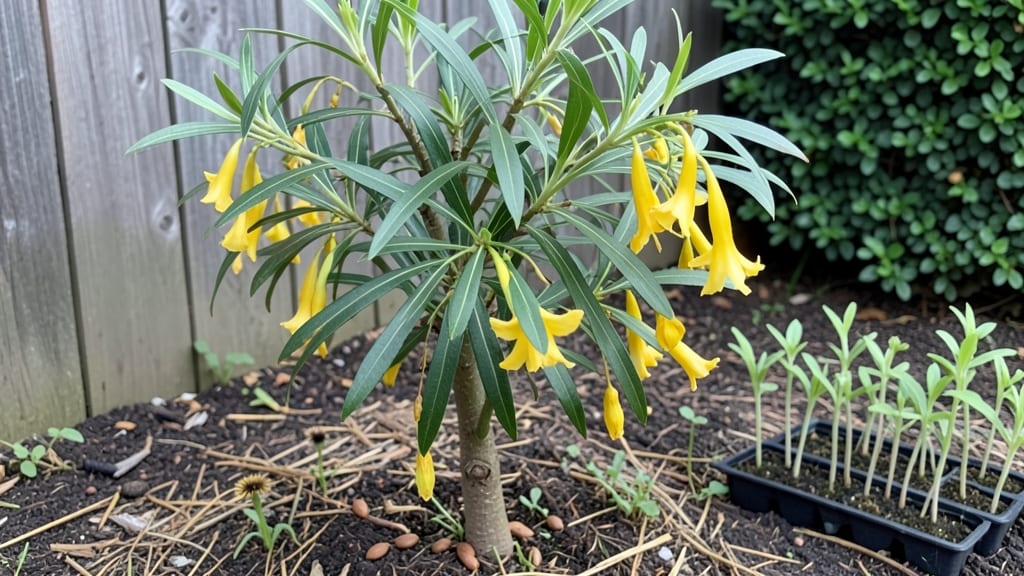
Growing yellow oleander from seeds is a project for bold gardeners—its striking orange blooms come with serious warnings. 🌿 This fast-growing shrub is stunning but deadly, so every step requires caution, from seed handling to disposal.
Before you even think about planting, know that every part of the plant is toxic, especially the seeds and sap.
Start with gloves and a well-ventilated workspace—no exceptions. Soak the seeds overnight to soften their tough outer shell, then plant them in a mix of sand and peat moss to prevent rot.
Keep the soil barely damp, never soggy, and place the pot in bright, indirect light until sprouts appear in 2-4 weeks. Transplant outdoors only after the last frost, in full sun and well-draining soil.
📚 In This Guide
- What you need
- Instructions
- Tips and common mistakes
- Wrapping up and next steps
What you need
- ● Nitrile or latex gloves (2+ pairs, thickened for chemical resistance—yellow oleander toxins can penetrate thin materials).
- ● N95 respirator mask (or better, like a half-face respirator with organic vapor cartridges if handling crushed seeds or sap).
- ● Safety goggles (ANSI-rated, with side shields to prevent seed/sap contact).
- ● Long-sleeved shirt and pants (made of dense fabric, like cotton or canvas—avoid synthetic materials that trap toxins).
- ● Disposable coveralls (tyvek-style, for full-body protection during removal).
- ● Pruning shears or loppers (sterilized with 70% isopropyl alcohol before/after use).
- ● Heavy-duty trash bags (2–3 mil thickness, double-bagged for seed disposal).
- ● Shovel or trowel (for digging up roots—yellow oleander spreads aggressively!).
- ● Plastic or metal container (5+ gallon, sealed with a lid for transporting seeds/plant parts to disposal).
- ● Labeling tape & permanent marker (to mark containers as “TOXIC—DO NOT OPEN”).
- ● Bleach or commercial herbicide (for treating tools/areas post-removal—1 part bleach to 10 parts water).
- ● Paper towels or rags (for wiping down surfaces; dispose of in sealed bags).
- ● Biohazard or hazardous waste disposal service (check local regulations—never compost or burn yellow oleander!).
- ● Digital camera or phone (to document the plant/location for records or expert verification).
- ● Field guide or plant ID app (e.g., iNaturalist or PictureThis to confirm yellow oleander vs. look-alikes).
- ● Pet/child barriers (if working near homes—keep them 10+ feet away from handling areas).
- ● First-aid kit (with activated charcoal and emergency contact numbers for poison control).
Instructions for safely handling yellow oleander seeds
This process keeps you and your plants protected while working with these highly toxic seeds.
🧤 Step 1: Gather Essential Safety Gear
Before touching any yellow oleander seeds, put on nitrile gloves that extend past your wrists. The seeds contain cardiac glycosides that can be absorbed through skin—no exceptions. I also grab a pair of safety goggles to prevent accidental eye contact with seed dust, which can cause irritation or worse.
Open all windows in your workspace to create a cross-ventilation breeze. If you're indoors, position a box fan near an open window to pull any airborne seed particles outside immediately. This is non-negotiable—oleander toxicity isn't something you want lingering in your home.
🧪 Step 2: Prepare a Containment Work Surface
Spread a disposable plastic sheet over your work surface to catch any seed fragments or spilled seed dust. I like to tape the edges down with painter's tape so it stays put when I'm handling seeds. This creates a barrier that makes cleanup easier and prevents accidental seed spread.
Place a small container of rubbing alcohol (at least 70% concentration) and a roll of paper towels nearby. You'll need these immediately if seeds come into contact with your skin or if you spill seeds. The alcohol helps decontaminate surfaces quickly while you clean up.
🌱 Step 3: Handle Seeds with Extreme Caution
Use a pair of tweezers to pick up each seed individually—never handle them with your bare hands, even through gloves. Place seeds in a sealed plastic bag labeled with the date and "TOXIC" in bold letters. I like to double-bag them as an extra precaution.
If you must open the seed packet, do it outdoors or in a well-ventilated area. Hold the packet over the plastic sheet and gently tear it open to avoid creating dust. You'll see tiny, brown seeds that look almost like coffee beans—handle them as if they're loaded ammunition.
⚠️ Step 4: Clean Up and Dispose of All Materials
After handling, immediately wipe down all surfaces with a paper towel dampened with rubbing alcohol. This includes your gloves, tweezers, and any containers that came into contact with seeds. Dispose of these materials in a sealed plastic bag marked "TOXIC WASTE."
Wash your hands thoroughly with soap and warm water for at least 30 seconds after removing gloves. I like to use a nail brush to ensure I get under my nails where seed residue might hide. Never wash contaminated materials down the drain or toss them in regular trash.
🚨 Step 5: Store Seeds Securely
Keep the sealed bag of yellow oleander seeds in a locked cabinet or safe that's out of reach of children and pets. I store mine in a fireproof safe in my garage, labeled with clear warning signs. This prevents accidental ingestion or exposure while also protecting the seeds from environmental damage.
If you're not planning to plant them immediately, keep them in a cool, dry place with consistent temperatures below 70°F. Check the sealed bag periodically for any signs of moisture or mold, which could compromise seed viability—or worse, create a toxic environment.
Tips & tricks for safe yellow oleander seed handling
Working with these toxic seeds requires extra precautions—here's what I've learned to keep myself and my workspace protected.
Gloves and Goggles: Double-check that your nitrile gloves extend at least 2 inches past your wrists in Step 1. I've found that standard household gloves don't provide enough protection—seed dust can still get under the cuffs. For extra security, I tuck the glove cuffs under my sleeves before putting on the goggles, creating a complete barrier. This prevents any accidental exposure through gaps.
Ventilation Strategy: The cross-ventilation in Step 1 is critical, but I've discovered a simple upgrade: position your box fan to blow directly toward the open window rather than away from it. This creates stronger suction that pulls airborne particles outside more effectively. I also like to run a second fan inside the room to circulate air away from my workspace—this prevents seed dust from settling anywhere near my breathing zone.
Containment Surface: When preparing your disposable plastic sheet in Step 2, I recommend using a sheet that's at least 3 feet larger than your workspace on all sides. This gives you extra room to work without worrying about seed fragments flying off the edges. I also keep a second plastic sheet nearby to immediately cover any spills or dropped seeds—this containment keeps everything in one place for easy cleanup.
Storage Temperature: The instructions mention keeping seeds below 70°F in Step 5, but I've found that consistency matters more than the exact temperature. I use a small digital thermometer in my storage safe to monitor conditions—any fluctuation above 70°F can start breaking down the seed viability. I also keep a small silica gel packet in the storage bag to absorb any moisture that might develop during seasonal temperature shifts.
Pro Tips for Yellow Oleander Seeds
- Working with these toxic seeds requires extra precautions—here's what I've learned to keep myself and my workspace protected.
- Gloves and Goggles: Double-check that your nitrile gloves extend at least 2 inches past your wrists in Step 1.
- Ventilation Strategy: The cross-ventilation in Step 1 is critical, but I've discovered a simple upgrade: position your box fan to blow directly toward the open window rather than away from it.
Frequently asked questions
Got questions about yellow oleander seeds? You’re not alone!
Here are the most common concerns—and expert-backed answers—to keep you safe and informed.
Are yellow oleander seeds poisonous to humans and pets?
Yes, extremely.
All parts of the yellow oleander plant—especially the seeds—contain deadly cardiac glycosides. Ingestion can cause severe vomiting, irregular heartbeat, or even death. Never handle seeds without gloves, and keep them far from children and pets.
How long do yellow oleander seeds take to germinate?
Under ideal conditions (warmth, moisture, and indirect light), seeds typically sprout in 14–21 days. However, germination can take up to 6 months if conditions aren’t perfect. Patience is key—don’t assume a seed is dead if it hasn’t sprouted yet!
Can I safely remove yellow oleander seeds without gloves?
No, never do this.
Even brief skin contact can cause irritation or absorption of toxins. Always wear nitrile gloves (not latex) and wash your hands thoroughly after handling. If seeds break or crush, ventilate the area immediately to avoid inhaling dust.
Are there non-toxic alternatives to yellow oleander for landscaping?
Try these low-maintenance, pet-safe substitutes:
- Jasmine (Trachelospermum) – Fragrant and drought-tolerant.
- Plumbago (Plumbago auriculata) – Blue flowers, non-toxic.
- Firebush (Hamelia patens) – Bright red blooms, hummingbird-friendly.
- Bougainvillea – Vibrant and hardy (though some varieties may irritate skin).
What should I do if someone ingests yellow oleander seeds?
Act fast!
Call Poison Control (1-800-222-1222 in the U.S.) or seek emergency medical help immediately. Do NOT induce vomiting unless instructed by a professional. Keep the plant container or seeds nearby to help with treatment.
Pro Tip: Disposing of seeds safely
If you must remove yellow oleander seeds:
- Double-bag seeds in sealed plastic and dispose in trash with a lid (not compost).
- Wear gloves and wash tools with soap and water.
- Avoid burning—toxic fumes can be released.
Wrapping up and next steps
Yellow oleander seeds may seem intriguing, but their high toxicity demands respect—never underestimate their dangers. Whether you're dealing with accidental exposure, cleanup, or disposal, safety first is non-negotiable.
Now that you’re armed with the right knowledge, take action: remove these seeds from your property, wear protective gear, and consult local authorities if needed.
Stay vigilant, and share this guide with others to help prevent accidents. Your awareness could save lives! 🌱💚