
Vegetables
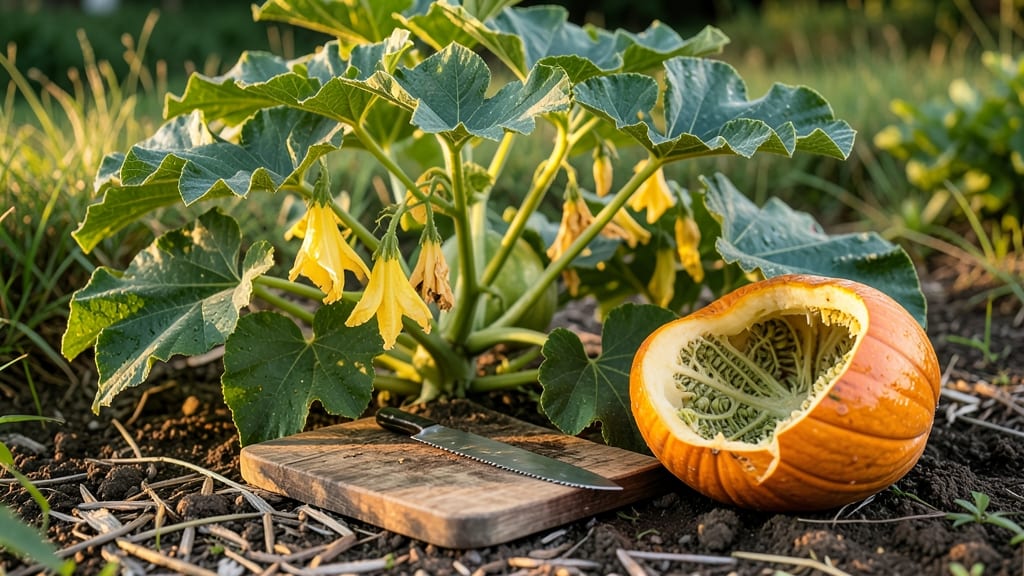
This green tint happens when seeds don't fully mature—they retain chlorophyll from the plant's photosynthesis process. 🌱 For example, seeds from pumpkins harvested too early often stay green inside, while those left on the vine longer develop their classic white or tan hues.
Some heirloom varieties even produce green seeds naturally, thanks to genetic traits passed down through generations.
Understanding this helps gardeners time their harvests better. If you're saving seeds for planting, waiting until the pumpkin's rind turns hard and the stem dries completely ensures more consistent seed color. Even green seeds can be roasted—just know they might have a slightly grassier flavor until fully matured.
💡 In This Article
- Genetic Factors Behind Green Pumpkin Seeds
- Harvesting Tips for Avoiding Green Seeds
Genetic factors behind green pumpkin seeds
Pumpkin seed color is primarily controlled by two genetic mechanisms: chlorophyll retention and pigment development. In most varieties, seeds start green because they contain chlorophyll—just like the plant leaves—until enzymes break it down during maturation.
This process is governed by recessive genes that trigger pigment conversion from green to white or tan as the seed dries on the vine. For example, Cucurbita pepo (common pumpkins) typically produces white seeds when fully mature, while their green-seeded counterparts often carry dominant traits that delay chlorophyll breakdown.
The science gets even more interesting when comparing species: Cucurbita moschata (like butternut squash) often shows green seeds due to slower metabolic processes, whereas Cucurbita maxima (giant pumpkins) usually yields white seeds. The key difference lies in carotenoid production—the orange-yellow pigments that mask chlorophyll.
Green-seeded varieties either produce less carotenoid or have genetic blocks preventing its accumulation. 💫 This explains why some heirloom pumpkins (like 'Green Streak') maintain their green seeds even when fully ripe.
Here's what most gardeners miss: seed color inheritance follows Mendelian patterns where green can be dominant or recessive depending on the variety. Cross-pollinating a green-seeded pumpkin with a white-seeded one might produce seeds with mixed pigmentation in the F1 generation.
For instance, 'Cinderella' pumpkins (green stems/seeds) demonstrate this trait consistently because their green color is linked to a dominant allele for chlorophyll retention.
Pigmentation science reveals another layer: chlorophyll's green hue comes from magnesium at the center of its molecular structure, while carotenoids (which create white/tan colors) are fat-soluble compounds. When seeds mature, enzymes like chlorophyllase break down the green pigment while carotenoids accumulate in the seed coat.
This biochemical switch explains why green seeds often have a slightly bitter, grassy flavor—they're chemically "stuck" in an earlier developmental stage.
For practical purposes, this genetic knowledge helps identify hybrid varieties. True-breeding green-seeded pumpkins will consistently produce green seeds, while hybrids might show color variations.
For example, 'Jack-Be-Little' pumpkins (green stems) will reliably yield green seeds, whereas commercial varieties like 'Howden' (white seeds) won't. This predictability is why seed savers prioritize specific varieties for consistent traits.
What's fascinating is how environmental factors interact with genetics. Even in green-seeded varieties, seeds may appear white if grown in high-light conditions that accelerate chlorophyll breakdown.
Conversely, cool temperatures can preserve green pigmentation longer. This explains why some gardeners report green seeds in late-season harvests—slower maturation preserves the chlorophyll's green signature. 🌿