Plants
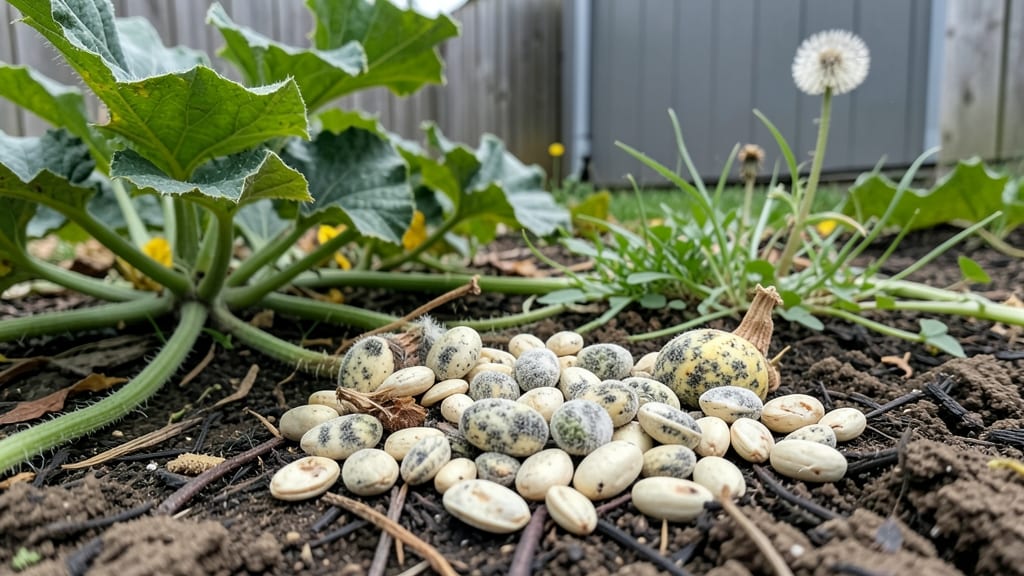
What do moldy pumpkin seeds look like? You’ll spot fuzzy white or gray spots that spread like a spiderweb across the shell—then they turn slimy to the touch and give off that unmistakable musty smell, like old damp hay, signaling trouble. sign.
The discoloration isn’t just ugly; it means the seed’s insides are rotting, making it unsafe for planting or eating.
These seeds often look dry on the outside but feel damp when you press them—another red flag. The mold can appear as powdery patches or even tiny black specks if fungal spores have taken hold.
If you crack one open, you’ll see the inside turning brown or black instead of the creamy white you expect.
Unfortunately, moldy seeds can’t be salvaged—toss them immediately to avoid spreading spores. But you can prevent this by storing seeds in a cool, dry place with good airflow, like a sealed container with silica packets or a breathable cloth bag.
Proper drying after harvest is key: spread seeds in a single layer for a few days until completely dry before storing. This simple step keeps your seeds fresh and mold-free for next year’s planting.
Why it happens
Moldy pumpkin seeds don’t just appear out of nowhere—they’re the result of a perfect storm of environmental and storage factors. Understanding these causes is key to preventing future spoilage and keeping your seeds safe to eat.
Let’s break down the science behind why your pumpkin seeds might be turning into a science experiment gone wrong.
🌡️ High Humidity: The Silent Moisture Magnet
Pumpkin seeds are highly sensitive to moisture, and humidity is their worst enemy. When relative humidity exceeds 60-70%, seeds absorb water from the air like a sponge.
This excess moisture creates the ideal breeding ground for Aspergillus, Penicillium, and other mold spores that naturally float in the air. These spores land on your seeds, germinate, and—within days—produce those telltale green, black, or white fuzzy patches.
💡 Actionable Fix: Store seeds in airtight containers with silica gel packets or food-grade desiccants to maintain humidity below 50%. A dehumidifier in your pantry or storage area can also work wonders.
🔥 Warm Temperatures: Speeding Up Spoilage
Heat is a mold accelerator. Most molds thrive between 77–86°F (25–30°C), and pumpkin seeds stored in warm conditions (like a sunny kitchen counter or near an oven) can spoil in as little as 3–5 days.
High temperatures also weaken the seed’s natural protective oils, making them more vulnerable to microbial attacks.
🌡️ Science Note: At 40°F (4°C) or below, mold growth slows dramatically. That’s why refrigeration or freezing is a game-changer for long-term storage.
💡 Actionable Fix: Keep seeds in a cool, dark place (like a root cellar or basement) or transfer them to the fridge if humidity is an issue. For long-term storage (6+ months), freeze them in an airtight bag with a paper towel to absorb any residual moisture.
🍃 Poor Airflow: Trapping Moisture and Spores
Seeds packed too tightly in a container create a stagnant, oxygen-poor environment—and molds love low-oxygen spaces. Without proper airflow, condensation builds up inside containers, leading to slimy textures and a musty, earthy smell (a classic sign of Geotrichum or Rhizopus molds).
Even if your seeds look dry, trapped moisture can trigger spoilage in 24–48 hours.
🔄 Science Note: Mold spores are everywhere—on your hands, in the air, even on the pumpkin itself. Sealed containers without ventilation give them a foothold.
💡 Actionable Fix:
- Use wide-mouth containers (like mason jars) with breathable lids or small holes poked in plastic bags.
- Store seeds in paper bags or mesh containers for short-term use (up to 2 weeks) to allow airflow.
- Avoid plastic bags with zip locks—they trap moisture like a greenhouse.
🧫 Contamination from Handling
Even if your seeds are stored perfectly, cross-contamination can ruin the batch. Mold spores can hitch a ride on:
- 👆 Dirty hands (especially after touching raw pumpkins or compost).
- 🍽️ Unclean utensils (like knives or spoons used on moldy food).
- 🌾 Infested pumpkins—some pumpkins may already have mold growing on the rind or seeds before harvest.
Once spores land on your seeds, they can multiply rapidly if conditions are right, leading to discolored spots (often blue-green or black) and a sour, vinegary odor.
💡 Actionable Fix:
- Wash seeds thoroughly with vinegar water (1:3 ratio) before drying to kill surface spores.
- Use clean, dedicated tools when scooping seeds from pumpkins.
- Discard any seeds from rotting or moldy pumpkins—don’t risk it!
⏳ Time: The Inevitable Aging Factor
Pumpkin seeds have a limited shelf life, even under perfect conditions. After 6–12 months, their natural oils start to degrade, making them more susceptible to mold. Over time, the seed’s protective outer shell weakens, allowing spores to penetrate more easily.
📊 Shelf Life Cheat Sheet:
Storage Method
Duration
Risk of Mold
Room temperature (dry, dark)
1–3 months
High (humidity/heat)
Refrigerated (airtight)
6–12 months
Low (if dry)
Frozen (with desiccant)
12+ months
Very low
💡 Actionable Fix: Label your seed containers with the harvest date and use the "first in, first out" (FIFO) method—eat the oldest seeds first to avoid waste.
Fixing and Preventing Mold in Pumpkin Seeds
Now that you know the signs of moldy pumpkin seeds—discolored spots, musty odors, or slimy textures—it’s time to act. Whether you’re dealing with a small batch of spoiled seeds or want to avoid future contamination, these practical solutions will help you salvage what’s left and keep your next harvest safe.
If you’ve spotted mold, don’t risk it—toss the affected seeds right away. Mold can release spores that spread to other seeds, storage containers, or even your kitchen. Here’s how to handle it safely:
- 🔍 Inspect thoroughly: Spread seeds on a clean towel or paper towel to check for hidden mold. Look for fuzzy growth, dark stains, or an off smell. - 🗑️ Discard contaminated seeds: Place moldy seeds in a sealed bag and throw them out.
Avoid composting if the mold is severe (some molds can survive composting). - 🧼 Clean your workspace: Wipe down surfaces, utensils, and storage containers with a 10% bleach solution (1 part bleach to 9 parts water) or vinegar to kill lingering spores.
Moisture is mold’s best friend. If your seeds are damp or stored incorrectly, they’ll spoil fast. Follow these steps to prevent future mold:
🔥 Dry Seeds Completely Before Storage
- 🌞 Sun-dry: Spread seeds in a single layer on a baking sheet or clean cloth in direct sunlight for 4–6 hours.
Sunlight naturally inhibits mold growth. - 🔥 Oven-dry (for emergencies): If seeds are damp, bake them at 170°F (77°C) for 10–15 minutes to kill moisture.
Stir occasionally to avoid burning. - ⏰ Air-dry indoors: Use a fan or dehumidifier in a warm, dry area for 1–2 days until seeds are crisp and dry to the touch.
📦 Store Seeds in Airtight, Moisture-Proof Containers
- ✅ Best containers: Glass jars with airtight lids, food-grade plastic bins with silicone seals, or mylar bags with oxygen absorbers (for long-term storage).
- 🌡️ Keep them cool and dry: Store seeds in a cool (50–70°F / 10–21°C), dark place like a pantry or fridge.
Avoid basements or garages where humidity builds up. - 💡 Pro tip: Add a silica gel packet or a small bag of rice to absorb excess moisture inside the container.
If you’re growing pumpkins, proactive steps can save your seeds from mold before it starts:
🍂 Harvest Seeds at Peak Ripeness
- 🎯 Wait for full maturity: Pick pumpkins when they’re fully colored and hard-shelled (usually 80–100 days after flowering).
- 🔪 Scoop seeds carefully: Use a clean knife to cut open the pumpkin and scoop out seeds with a spoon.
Avoid tearing the flesh, which can introduce moisture.
🌿 Clean and Cure Seeds Correctly
- 🧼 Rinse seeds: Remove pulp by rubbing seeds under cool water and letting them dry on a towel.
- 🧴 Ferment (optional for flavor): Soak seeds in water for 1–3 days to remove bitter coatings (fermentation also helps preserve them).
Drain and dry thoroughly afterward. - 🌡️ Cure seeds: Spread them in a single layer and let them dry for 2–3 weeks in a warm, dry place before storing.
If you notice mold after storage, act fast: - 🔍 Check storage conditions: High humidity or temperature swings can cause mold.
Move seeds to a drier, cooler spot. - 🌬️ Use food-safe preservatives: Sprinkle a tiny amount of cinnamon or clove powder (natural antifungals) over seeds before sealing the container. - ⏳ Rotate your stock: If seeds are old (over 1 year), they’re more prone to mold. Use older seeds first and store new batches separately.
By following these steps, you’ll eliminate mold risks and enjoy fresh, safe pumpkin seeds for roasting, planting, or snacking—without the slimy surprises! 🎉
Frequently asked questions about moldy pumpkin seeds
What color are moldy pumpkin seeds?
Moldy pumpkin seeds often develop fuzzy white, gray, or greenish patches that spread like a spiderweb. In advanced cases, you may see black or brown discoloration on the shell or inside the seed when cracked open. These colors signal fungal growth and should never be ignored.
Can you eat moldy pumpkin seeds?
No, you should never eat moldy pumpkin seeds. Mold produces toxins that can cause food poisoning or allergic reactions. Even if the mold appears only on the shell, spores can contaminate the edible part. When in doubt, throw them out to stay safe.
How do I know if my pumpkin seeds are still good?
Good pumpkin seeds should be dry, hard, and creamy white or tan inside. Press a seed—if it feels damp or smells musty, discard it. Also check for no fuzzy growth, dark spots, or slimy textures. Store-bought seeds usually have preservatives, but homegrown seeds spoil faster.
Can I save moldy pumpkin seeds for planting?
Absolutely not. Moldy seeds won’t germinate and may introduce disease to your garden. Even if they look slightly moldy, the spores can contaminate soil or other seeds. Always use completely dry, clean seeds for planting to ensure healthy growth.
What’s the best way to store pumpkin seeds long-term?
For long-term storage, keep seeds in airtight containers with silica gel packets in a cool, dark place (like the fridge or freezer). Label containers with the harvest date and use the oldest seeds first. Properly stored seeds last 6–12 months without spoiling.