
Trees
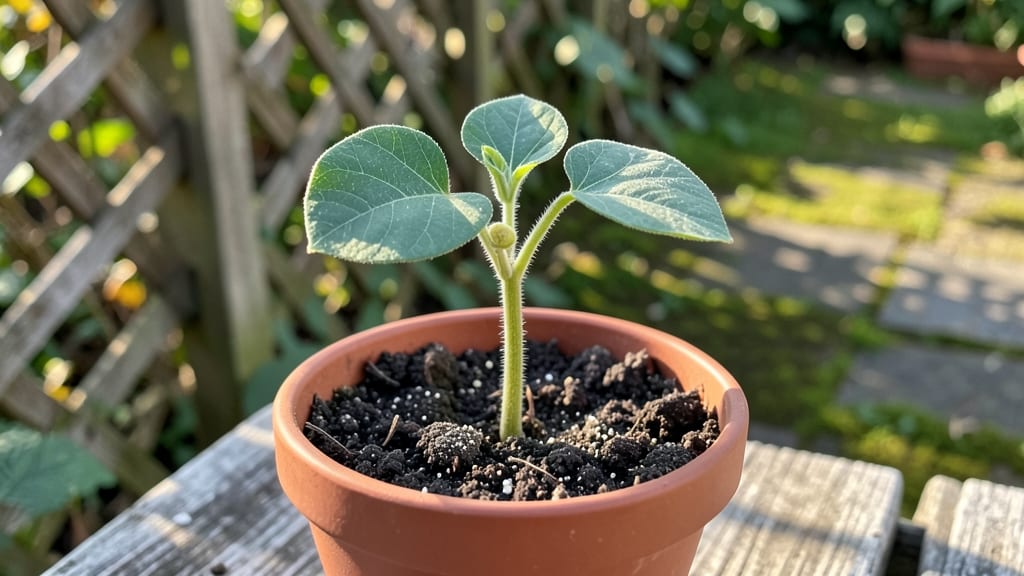
Mastering moonflower seedling identification early saves you from weeding out what could become your garden’s night-blooming star—these delicate plants start with heart-shaped leaves that look almost too perfect to be real, and their rapid growth sets them apart. slower-moving weeds.
The key is watching for those first true leaves—smooth-edged, deep green, and slightly glossy—appearing about two weeks after germination. Moonflower seedlings also grow upward at a sharp angle, unlike many weeds that sprawl or stay low to the ground.
Confusing them with morning glory seedlings is common, but moonflowers develop a slightly hairy stem by the third week.
Once you spot them, give those seedlings room to breathe. They thrive in well-draining soil and need consistent moisture without soggy roots. A small stake or trellis nearby helps them climb early, preventing flopping that can smother young plants.
This identification skill becomes especially useful when moonflowers self-seed aggressively. Knowing what to look for means you'll never mistake them for weeds again—and you'll get to enjoy those magical white blooms opening at dusk every summer.
📚 In This Guide
- What you need
- Instructions
- Tips and common mistakes
- Wrapping up and next steps
What you need
- ○ Moonflower seeds (optional but helpful): Fresh, viable seeds (e.g., Ipomoea alba) for comparison—1-2 packets (50-100 seeds) to reference growth stages.
- ● Magnifying glass or hand lens: 10x magnification to inspect fine details like leaf texture or seedling hairs.
- ● Notebook or digital device: For recording observations (include a ruler or measuring tape for tracking seedling height).
- ● Pruning shears or small scissors: Sharp, sterilized for safely collecting samples (if needed).
- ● Garden gloves: Lightweight, breathable to protect hands from soil or sap.
- ● Grow light or sunny outdoor space: Ensure 6-8 hours of indirect light daily for healthy seedlings (if growing your own for comparison).
- ● Potting soil or seed-starting mix: Sterile, well-draining (e.g., 50% peat moss, 30% perlite, 20% vermiculite) if propagating seeds.
- ● Spray bottle with water: Room-temperature, distilled for gentle misting (avoid overwatering!).
- ● Moonflower reference guide: Printed or digital (e.g., USDA Plant Database or local botanical society resources).
- ● Seedling trays or small pots: 2-3 inch diameter with drainage holes for nurturing young plants.
- ● Humidity dome or plastic wrap: To retain moisture during early growth stages.
- ● Soil pH tester: Moonflowers prefer slightly acidic to neutral soil (pH 6.0-7.0).
- ● Camera or smartphone: For documenting growth stages (use natural light for accurate colors).
- ● Local plant identification app: Like iNaturalist or PictureThis for cross-referencing features.
Instructions for identifying moonflower seedlings at every stage
Here's how to recognize each growth phase so you never mistake them for weeds or other vines.
Recognize Germination and First True Leaves
Moonflower seedlings emerge with two small, rounded cotyledons that resemble miniature maple leaves—smooth, slightly glossy, and arranged opposite each other on the stem. These aren't the "true" leaves you're looking for, but they're your first clue. The cotyledons typically appear 7-14 days after sowing, depending on soil warmth.
Watch for the first true leaves to appear 2-3 weeks after germination. These will be deeply lobed, resembling tiny versions of the mature moonflower's broad, heart-shaped leaves. Unlike cotyledons, true leaves grow in a spiral pattern along the stem. If you see only two leaves at this stage, they're still cotyledons—wait for the third leaf to confirm you're dealing with a moonflower.
Identify the Vine and Leaf Structure
Once your seedlings develop 3-4 true leaves, you'll notice their distinctive vine habit. Moonflower vines grow quickly, often reaching 6-12 inches in height within 4-6 weeks of germination. The leaves are the most reliable identifier: they're 3-5 inches wide, deeply lobed with 5-7 rounded lobes, and have a soft, velvety texture that sets them apart from other vines.
Run your fingers along the stem—moonflower vines are smooth and hairless, unlike morning glory vines which may have fine hairs. The leaves also have prominent veins that create a network pattern, making them easier to distinguish from other fast-growing seedlings. If the leaves are narrow or have pointed tips, you're likely looking at a different vine species.
Spot the Tendrils and Growth Pattern
By the time your seedlings reach 4-6 weeks, they'll begin producing tendrils—thin, spiral structures that help the vine climb. These tendrils grow from the leaf axils (the point where the leaf meets the stem) and are a dead giveaway for moonflowers. Unlike some other climbing plants, moonflower tendrils are not branched and appear as simple, coiled loops.
Pay attention to how the vine grows: moonflowers develop in a zigzag pattern, with leaves emerging at sharp angles rather than evenly spaced. This uneven growth is another key feature. If your seedlings are growing in a straight line with evenly spaced leaves, they're likely not moonflowers.
Confirm with Flower Bud Development
Around 8-10 weeks, you'll start seeing flower buds forming in the leaf axils. These buds are small, round, and covered in fine hairs—unlike the smooth, hairless stems and leaves. The buds will eventually open into the iconic large, white, moon-shaped flowers, but even in bud form, they're distinctive.
If you're unsure, gently inspect the underside of the leaves. Moonflower leaves often have a slightly fuzzy texture on the underside, especially near the veins. This fuzziness is more pronounced in young plants and fades as they mature. Compare this to other vines in your garden—most won't have this characteristic fuzz.
Differentiate from Common Look-Alikes
Moonflowers can be confused with morning glories, another popular vine. However, morning glory leaves are narrower, more pointed, and often have a rougher texture. Their tendrils are also branched, whereas moonflower tendrils remain simple and unbranched. If your seedlings have deeply lobed leaves and smooth, hairless vines, they're almost certainly moonflowers.
Another common mistake is confusing moonflower seedlings with bindweed, an invasive weed with heart-shaped leaves. Bindweed leaves are smaller, more pointed, and the plant produces white, funnel-shaped flowers rather than the large, white, moon-shaped blooms of the moonflower. Always check for these distinguishing features to avoid misidentification.
Tips & tricks for perfect moonflower seedling identification
Identifying moonflower seedlings correctly can save you from mistakenly pulling up your future garden stars. Here's what I've learned after years of gardening—these key details make all the difference.
Timing is Everything: The 7-14 day window for cotyledon emergence is crucial—don't rush this stage. Cold soil can delay germination, so if you're planting in cooler climates, consider using a seedling heat mat to maintain consistent soil temperatures. I've found that keeping soil between 70-75°F speeds up this initial process significantly, helping cotyledons appear right on schedule.
Leaf Pattern is Non-Negotiable: When you reach Step 1 and see those first true leaves, pay attention to their arrangement. The spiral pattern is your best friend—it's what separates moonflowers from many look-alikes. I've seen gardeners mistake morning glory seedlings for moonflowers because they focused only on leaf shape rather than this critical growth pattern. Take a magnifying glass if needed; the details matter.
Texture Tells the Story: That soft, velvety texture mentioned in Step 2 is often overlooked but is one of the most reliable identifiers. Run your fingers along the leaves—moonflower leaves should feel almost silky compared to the rougher texture of morning glory leaves. This characteristic becomes more pronounced as the plant matures, making it an excellent feature to watch for in later stages.
Growth Habit Differences: The zigzag pattern described in Step 3 is a game-changer for identification. Unlike many vines that grow in straight lines, moonflowers develop at these sharp angles. I've created a simple chart that shows side-by-side comparisons of moonflower growth patterns versus morning glory and bindweed—it's helped countless gardeners spot the differences immediately.
Pro Tips for Moonflower Seedling Identification
- Identifying moonflower seedlings correctly can save you from mistakenly pulling up your future garden stars.
- Timing is Everything: The 7-14 day window for cotyledon emergence is crucial—don't rush this stage.
- Leaf Pattern is Non-Negotiable: When you reach Step 1 and see those first true leaves, pay attention to their arrangement.
Frequently asked questions
Got questions about spotting and nurturing moonflower seedlings? You’re not alone! Here are some of the most common queries—plus quick, actionable answers to keep your little climbers thriving.
How do I tell if my moonflower seedling is healthy?
A healthy moonflower seedling has glossy, deep green leaves (not yellow or spotted) and sturdy stems. Check the soil: it should be moist but not soggy. If leaves wilt or droop, it may need water or better drainage. Pro tip: Gently tug the seedling—if it resists, roots are strong!
When should I expect my moonflower seeds to sprout?
Moonflower seeds typically sprout in 7–21 days under ideal conditions (warmth, moisture, and indirect light). If your soil stays above 70°F (21°C) and you keep it consistently damp, germination speeds up. Patience is key! If nothing appears after 3 weeks, try nicking the seed coat gently with sandpaper to help water penetrate.
Can I transplant moonflower seedlings too soon?
Wait until seedlings have 2–4 true leaves (not just the first seed leaves) and are at least 3–4 inches tall before transplanting. Harden them off first by placing them outdoors for 1–2 hours daily over 5–7 days. Warning: Moonflowers are sensitive to root disturbance—handle seedlings by the leaves, not the stem!
What if my moonflower seedlings look leggy or weak?
Leggy seedlings often mean they’re stretched for light. Move them to a sunnier spot (but avoid direct midday sun) and rotate the pot daily for even growth. If soil nutrients are lacking, use a balanced fertilizer (10-10-10) at half-strength. Bonus: A small LED grow light (12–16 hours/day) can boost vigor!
Are there alternatives to moonflowers for fast-growing climbers?
Yes! If moonflowers aren’t your style, try these quick-growing climbers:
- Morning Glory – Blooms in 60–90 days, similar care.
- Sweet Pea – Fragrant flowers, cold-hardy, and fast.
- Honeysuckle – Attracts pollinators, thrives in partial shade.
Wrapping up and next steps
Identifying moonflower seedlings is all about paying attention to those delicate heart-shaped leaves, velvety textures, and rapid growth patterns—plus knowing what to watch for as they mature.
Whether you’re a gardening newbie or a seasoned plant parent, spotting the right clues early ensures your moonflower thrives into those stunning night-blooming beauties. 🌙✨
Now that you’re armed with the know-how, why not take the next step? Start by planting a few seedlings in well-draining soil, give them some love (and shade at first!), and watch your garden transform. Happy growing—your moonlit masterpiece awaits! 🌱💚