
Picking
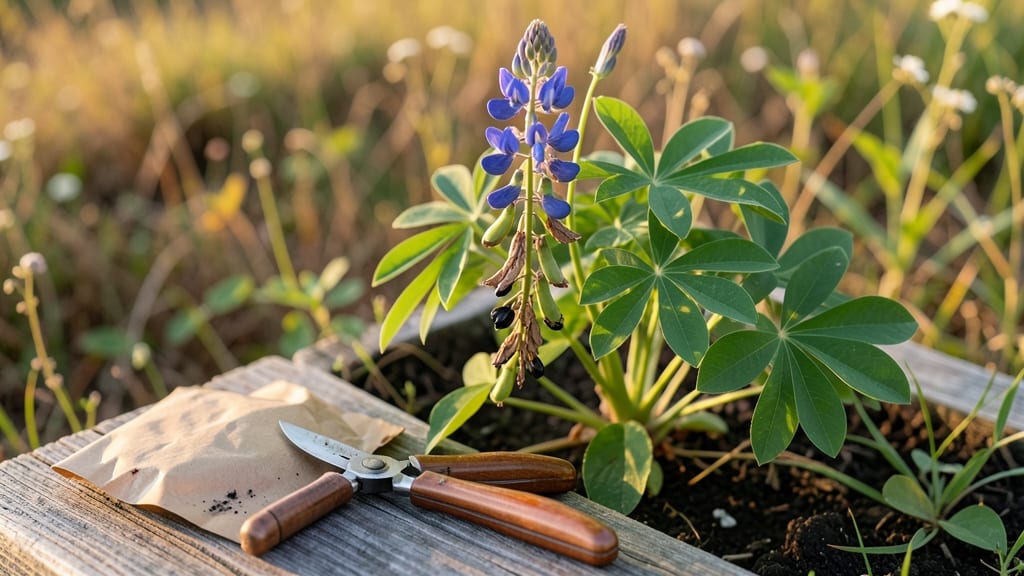
To harvest lupine seeds, wait until pods turn brown and dry on the plant, then gently twist or snip them off. Split open the pods to release seeds, dry them in a warm, well-ventilated area, and store in a sealed container away from moisture.
Harvesting lupine seeds at the right stage ensures maximum yield and viability.
The pods should be completely dry and brown—this usually happens in late summer or early fall, depending on your climate. 🌾 I’ve found that waiting until the pods start splitting open on their own is a good indicator they’re ready, as this means the seeds inside are fully mature and less likely to sprout prematurely.
If you harvest too early, the seeds won’t dry properly, while waiting too long risks them scattering on the ground.
Once collected, proper drying is key to preventing mold or spoilage. Spread the pods in a single layer on a mesh screen or paper towel in a warm, dry spot away from direct sunlight. If you’re in a humid climate, consider using a fan to improve airflow.
After the seeds are fully dry and rattle when shaken, store them in a sealed container—glass jars work best for long-term preservation, as they keep pests out while allowing you to monitor moisture levels.
💡 In This Article
- Best Time to Harvest Lupine Seed Pods
- Proper Lupine Seed Drying and Storage Tips
Best time to harvest lupine seed pods
Here's what's actually happening with lupine pods when they're ready for harvest: the pods undergo a natural drying process called desiccation, where moisture content drops from about 60-70% to 10-15%—this is when the seeds reach their maximum viability.
The transformation from green to brown isn't just cosmetic; it signals the plant has completed its reproductive cycle and redirected nutrients to the seeds. In cooler climates, this typically occurs 8-12 weeks after flowering, while warmer regions may see maturation in as few as 6 weeks. 🔥
The key visual cues go beyond just color. Mature pods develop a papery texture that feels dry to the touch, almost brittle at the seams. You'll notice the pod walls become translucent enough to see the dark brown or black seeds through the shell—this visibility is your best indicator.
Another telltale sign is the pods starting to split open naturally at the seams; this happens when internal seed pressure exceeds the pod's structural integrity.
What most people don't realize is that harvesting pods that are still 50% green can reduce seed viability by up to 40% due to incomplete nutrient transfer.
Climate plays a massive role in timing. In humid environments (like the Pacific Northwest), pods may take 2-3 weeks longer to fully mature because excess moisture slows the desiccation process. I've found that morning harvests work best—pods are 10-15% drier after overnight evaporation, making them easier to handle.
The ideal weather window is 5-7 days of dry, sunny conditions with temperatures between 65-75°F; this range maximizes photosynthesis while minimizing fungal growth on the pods. 💫
There's an important distinction between field-ready and overripe pods. Field-ready pods are brown but still firmly attached—they'll twist off cleanly with a gentle motion. Overripe pods have already released some seeds and may develop blackened edges from fungal infection.
The seed viability drop is dramatic here: pods left 10+ days past maturity can see germination rates plummet from 90% to below 50%.
This is why timing matters more than you might think—it's not just about color, but about catching that 3-5 day window when pods are dry but haven't started degrading.
For those in high-altitude regions (above 5,000 feet), the growing season is compressed, so pods may mature 2-3 weeks earlier than at sea level. The thinner air accelerates the drying process, and you'll need to monitor pods daily during this critical window.
What's fascinating is how lupines actually self-regulate this process—if temperatures drop below 50°F during maturation, the plant will delay seed release until conditions improve, ensuring better survival odds for the next generation. 🌟
One advanced technique I've used with success is the "shake test": hold a mature-looking pod over a white surface and give it a firm shake. If 3+ seeds fall out easily, it's ready for harvest.
This works because the seeds have fully detached from the pod walls by this stage. For large-scale harvesting, I recommend collecting pods in paper bags rather than plastic—this allows any remaining moisture to escape while preventing condensation buildup during transport.
The bags should be breathable enough that you can see light through them, but not so thin that seeds might escape.