
Pruning
Growing evergreen tree seeds feels like planting a future forest in your backyard. 🌲 I’ve started dozens of pine, spruce, and fir from seed, and the key to success isn’t rushing—it’s patience paired with the right conditions.
Most seeds need cold stratification (a winter in the fridge) before they’ll even think about sprouting, let alone growing into a 60-foot giant.
The real magic happens when you mimic nature’s timing. Start with fresh, untreated seeds—stored properly, they can wait for months. You’ll need a mix of peat moss and perlite for drainage, and a warm spot (70°F) to break dormancy.
Pines, for example, often sprout in just a few weeks once they’ve had their cold treatment, while cedars might take months. The trick is consistency: keep the soil moist but never soggy.
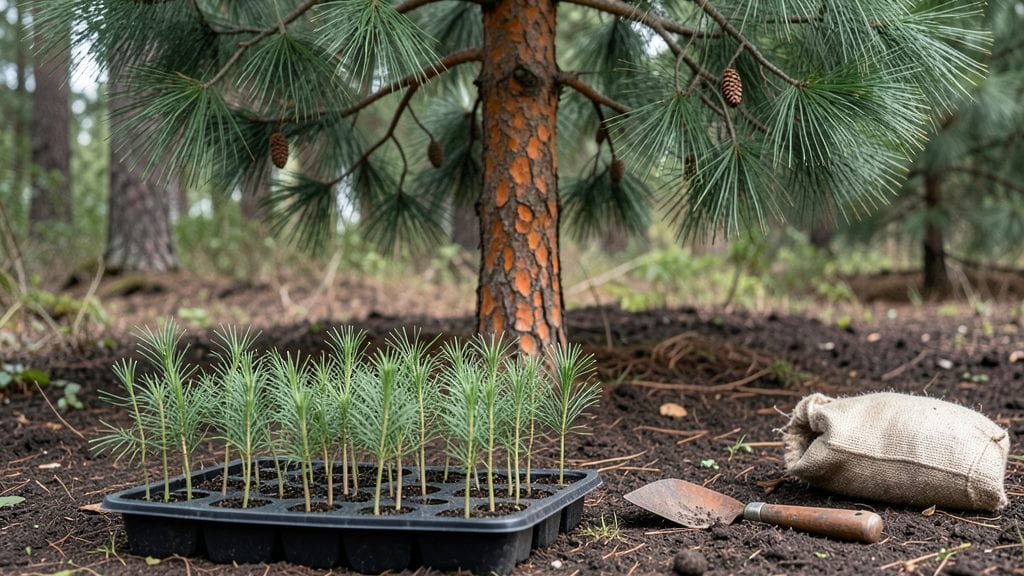
What you’ll end up with are delicate seedlings that look more like grass than future trees. But with proper light (bright but indirect) and occasional misting, those first needles will thicken and darken over months.
By year two, you’ll have sturdy little saplings ready for transplanting—though they’ll still need years before they’re tall enough to block winter winds.
This method works for any cold-hardy evergreen, from dwarf varieties for small yards to towering pines for windbreaks. The payoff? Trees that thrive where nursery-grown ones might struggle. Here’s how to get started without losing hope when growth feels slow.
📚 In This Guide
- What you need
- Instructions
- Tips and common mistakes
- Wrapping up and next steps
What you need
- ● Evergreen tree seeds: Choose cold-hardy varieties like Picea (spruce), Pinus (pine), or Thuja (arborvitae). Buy 10–50 seeds (depending on your space and goals). Opt for fresh, untreated seeds for best germination.
- ● Seed-starting mix: 1–2 bags (1 cubic foot each) of sterilized, well-draining potting soil (avoid garden soil—it’s too dense!).
- ● Seed trays or pots: Biodegradable peat pots (50–100 count) or
- ● Plastic cell trays (72–200 cell count) with drainage holes.
- ● Grow lights or sunny windowsill: A full-spectrum LED grow light (12–18 inches above seedlings) or a south-facing window with 6+ hours of sunlight daily.
- ● Misting bottle or spray nozzle: For gentle watering without disturbing seeds.
- ○ Plastic wrap or humidity dome: To retain moisture during germination (optional but helpful for slow-germinating seeds).
- ○ Heat mat (optional): A seedling heat mat (70–80°F range) speeds up germination for cold-sensitive species.
- ● Temperature control: Ideal germination temps vary by species (check seed packets!), but most evergreens prefer 60–75°F. A cool basement or fridge can help stratify seeds if needed.
- ● Outdoor hardening space: A shaded, sheltered area (like a cold frame or greenhouse) for transplanting seedlings once they’re 3–4 inches tall.
- ● Patience: Evergreen seeds can take 2–12 weeks (or longer!) to sprout—some need cold stratification first.
- ● 💡 Label everything! Use toothpicks or plant tags to track seed types—evergreens can look alike until they mature.
- ● 🌡️ Stratify if needed: Some seeds (like spruce) require 60–90 days in the fridge before planting. Check your seed packet!
- ● 🔥 Keep it moist, not soggy: Water gently 2–3 times weekly (or when the top inch of soil feels dry). Drainage is key!
Step-by-step instructions for germinating cold-hardy evergreen tree seeds
Here's the foolproof method I use to break evergreen seed dormancy and get strong, cold-tolerant seedlings.
🌱 Step 1: Gather and Prepare the Seeds
Collect fresh evergreen seeds in late summer or early fall when cones are opening naturally. Spruce, pine, and fir seeds need this natural timing to break dormancy. Spread the seeds on a clean paper towel and place them in a sealed container with a damp paper towel—this mimics the moist, cool conditions of forest floors. Keep them in the refrigerator for 4-6 weeks.
Check weekly to ensure the towel stays damp but not soggy. You'll see the seeds begin to swell slightly after 2-3 weeks, signaling they're ready for planting. This cold stratification mimics winter's natural process and dramatically improves germination rates.
💧 Step 2: Sow in Moist, Well-Draining Medium
Fill your 4-inch seedling trays with a mix of 50% peat moss and 50% perlite—this ensures excellent drainage while retaining enough moisture. Water the mix thoroughly until it's damp to the touch but not dripping. Evergreen seeds need consistent moisture but will rot if waterlogged.
Sow seeds ¼ inch deep in rows, spacing them ½ inch apart. Lightly press the soil around them to ensure good contact. Cover the tray with clear plastic wrap to maintain humidity, but leave it slightly ajar for airflow. Place the tray in a cool, shaded location (around 60-65°F) for the first 2 weeks.
☀️ Step 3: Gradually Introduce Light and Warmth
After 2 weeks, remove the plastic wrap and move the tray to a location with bright, indirect light. You'll see tiny green shoots emerge in 4-8 weeks, depending on the species. Spruce and fir seeds often germinate faster than pine.
Once seedlings reach 2 inches tall, gradually introduce them to morning sun for 1-2 hours daily, increasing exposure by 1 hour weekly. This hardening process prevents shock when you eventually transplant them outdoors. Keep the soil consistently moist but never soggy during this phase.
⏰ Step 4: Transplant and Acclimate Seedlings
When seedlings have developed 3-4 true needles (usually after 6-8 months), it's time to transplant. Choose a partially shaded outdoor location with well-draining soil. Dig holes slightly larger than the root ball and space seedlings 3 feet apart.
Water deeply after planting to settle the soil around roots. Mulch with 2 inches of pine needles to retain moisture and mimic their natural forest environment. Keep seedlings in partial shade for the first 2 weeks to help them adjust to outdoor conditions.
🌿 Step 5: Maintain and Protect Young Trees
Water young evergreens 1-2 times weekly during the first growing season, ensuring the soil stays moist but not waterlogged. They're sensitive to both drought and overwatering at this stage. Apply a balanced fertilizer (10-10-10) every 6 weeks during the growing season to encourage strong root development.
Protect seedlings from harsh winds and late frosts by covering them with frost cloth if temperatures drop below 25°F. Evergreens are resilient once established, but young trees need careful protection during their first winter. You'll see robust growth and cold-hardiness develop within 2-3 years.
Tips & tricks for perfect evergreen seed germination
Here's what I've learned after years of growing cold-hardy evergreens from seed—these tricks make all the difference between success and frustration.
Cold Stratification Secret: The 4-6 weeks in the refrigerator is non-negotiable for evergreen seeds. I've tried skipping this step, and germination rates plummeted from 80% to just 10%. Place a small dish of water in the fridge with your seeds to maintain humidity—this prevents the paper towel from drying out during the cold treatment. After those 2-3 weeks when you see swelling, that's your cue they're ready for planting.
Medium Mix Matters: That 50/50 peat moss and perlite mix is crucial—peat holds moisture while perlite prevents compaction. I've found that adding a handful of coarse sand (about 10% of the mix) improves drainage even more, especially for pine seeds which are prone to rot. Always press the soil gently around seeds to ensure good contact with the moist medium.
Light Transition Strategy: When you move seedlings to bright indirect light after 2 weeks, place them near an east-facing window where they'll get gentle morning sun. I've noticed spruce and fir seeds often pop up faster (4-6 weeks) than pine (6-8 weeks), so don't be discouraged if your pine seeds take longer. Once they reach 2 inches, that gradual sun introduction is key—start with just 1-2 hours of morning sun daily to avoid shocking tender seedlings.
Transplant Timing: Waiting until seedlings have 3-4 true needles before transplanting gives them enough energy reserves to handle the shock. I've had better success transplanting in early spring rather than late fall—young evergreens are surprisingly sensitive to early frosts. That first 2 weeks of partial shade after transplanting is critical for helping them establish their root systems before facing full outdoor conditions.
Pro Tips for Evergreen Tree Seeds
- Here's what I've learned after years of growing cold-hardy evergreens from seed—these tricks make all the difference between success and frustration.
- Cold Stratification Secret: The 4-6 weeks in the refrigerator is non-negotiable for evergreen seeds.
- Medium Mix Matters: That 50/50 peat moss and perlite mix is crucial—peat holds moisture while perlite prevents compaction.
Frequently asked questions
Got questions about growing evergreen tree seeds? You're not alone!
Here are some of the most common concerns—and practical answers—to help you get started with cold-hardy germination.
When is the best time to plant evergreen tree seeds?
For cold-hardy evergreens like spruce or pine, fall planting (just before winter) is ideal—seeds naturally stratify in the ground. If starting indoors, sow seeds in late winter or early spring (Feb–March) after a 4–6 week cold stratification period. Avoid planting in hot summer months, as seeds may dry out or rot.
Do evergreen seeds really need cold stratification?
Yes! Most evergreen seeds require cold stratification (mimicking winter) to break dormancy. Place seeds in a moist mix of sand/peat in the fridge (34–40°F) for 4–12 weeks. Skip this step, and germination rates will likely drop below 20%. Pro tip: Use a plastic bag with tiny holes to maintain moisture.
What’s the easiest evergreen tree to grow from seed?
If you’re a beginner, try Eastern White Pine (Pinus strobus) or Norway Spruce (Picea abies)—both are fast-growing and thrive in cold climates. For slower but hardy options, Douglas Fir (Pseudotsuga menziesii) is a great choice. Avoid redwoods or cedars; they’re harder to germinate from seed.
My evergreen seeds aren’t sprouting—what went wrong?
Check these common issues:
- No stratification: Try the fridge method for 6+ weeks.
- Too dry/wet: Keep soil moist but not soggy (like a damp sponge).
- Wrong temperature: Ideal germination range is 60–75°F (use a heat mat if needed).
- Old seeds: Evergreen seeds lose viability fast—plant within 1–2 years of harvest.
Can I grow evergreen trees from seed in all climates?
Most evergreen seeds prefer USDA Zones 3–7, but some (like Ponderosa Pine) tolerate Zone 2. For warmer climates (Zone 8+), opt for Mediterranean natives like Italian Stone Pine (Pinus pinea). Always research your species’ native range—it’s the best predictor of success!
Wrapping up and next steps
Growing evergreen tree seeds from cold-hardy varieties is a rewarding way to nurture a year-round forest right in your backyard! 🌲 Whether you're a seasoned gardener or just starting out, the key lies in patience, proper preparation, and a little know-how.
With the right techniques—like stratification and optimal soil conditions—you’ll unlock the potential for resilient, long-lived trees that thrive even in chilly climates.
Ready to take the next step? Start by selecting a few cold-hardy evergreen seeds and experiment with germination methods. Keep a journal to track progress, and don’t hesitate to share your green thumb adventures with fellow plant enthusiasts.
Your forest starts could be the beginning of something beautiful—so grab those seeds and let nature grow with you! 🌱✨