
Vegetables
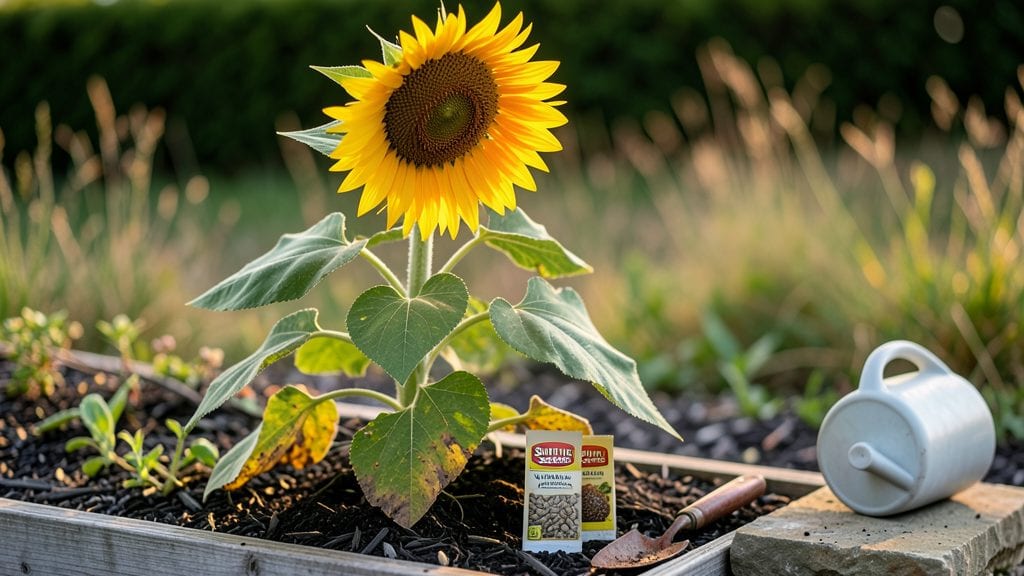
You can broadcast sunflower seeds, but it requires precise spacing and depth—typically 1-2 inches deep—to prevent overcrowding and ensure strong germination, especially in well-prepared, loose soil.
Sunflower seeds thrive when scattered widely because they need plenty of space to grow tall without competing for sunlight or nutrients. 🌻 The key is loosening the soil beforehand to create an ideal environment for roots to establish quickly.
I’ve found that using a seed spreader helps distribute seeds evenly, reducing the need for later thinning. Just be mindful of spacing—sunflowers left too close will fight for resources, resulting in smaller blooms.
After planting, keep the soil consistently moist but not soggy, as sunflower seeds need steady hydration to sprout. Mulching lightly around seedlings can help retain moisture and suppress weeds, giving your sunflowers the best possible start. This method works especially well in larger garden plots where precision planting isn’t practical.
💡 In This Article
- Optimal Spacing and Depth for Sunflower Seed Broadcasting
- Broadcasting Sunflower Seeds: Tools and Techniques for Success
Optimal spacing and depth for sunflower seed broadcasting
Sunflower seeds need strategic spacing because each plant requires significant resources to grow. When seeds are too close, they compete aggressively for sunlight, water, and nutrients, resulting in stunted growth and smaller blooms.
The ideal spacing is 12-18 inches apart for most varieties, allowing each plant to develop a strong taproot and reach its full height of 6-12 feet without obstruction. This spacing mimics their natural habitat, where sunflowers grow in open fields with minimal competition.
The depth of planting is equally critical—sunflower seeds should be buried only 1-2 inches deep in loose, well-drained soil. Deeper planting delays germination because seeds need moisture and oxygen to sprout, while shallower planting risks exposing them to drying winds or bird predation.
The seed's natural oils also benefit from being just beneath the surface, where soil warmth accelerates the breakdown of the seed coat and triggers root development. 🌱
Soil preparation plays a pivotal role in success. Before broadcasting, loosen the top 4-6 inches of soil to improve aeration and drainage, which prevents waterlogging that can rot seeds.
Sunflowers prefer slightly acidic to neutral soil (pH 6.0-7.5) and benefit from a light application of compost or aged manure to boost nutrient availability. Proper soil structure ensures roots can penetrate easily, reducing the risk of seedling disease caused by compacted or waterlogged conditions.
Moisture levels are another key factor—sunflower seeds need consistent soil moisture to germinate, but overwatering can suffocate them. Aim to keep the soil evenly moist (not soggy) during the first 2-3 weeks after planting.
A light mulch layer (1 inch) helps retain moisture while preventing weed competition. This balance is especially important in hot climates, where rapid evaporation can dry out seeds before they sprout.
What most gardeners overlook is the role of sunlight in early growth. Sunflower seedlings require full sun (6-8 hours daily) to develop properly, and overcrowding blocks this light. If you're planting in rows, space them 24-36 inches apart to allow sunlight to reach all plants evenly.
In contrast, broadcasting seeds in open areas (like fields) lets each seedling access sunlight from multiple directions, promoting faster and healthier growth.
For large-scale broadcasting, consider using a seed spreader to achieve uniform distribution. Hand-broadcasting works for small areas but often leads to clumping, which increases the risk of disease and pest issues. After germination, thin seedlings to maintain the 12-18 inch spacing, ensuring only the strongest plants remain.
This step is crucial for maximizing bloom size and yield, as sunflowers left too close will produce smaller, less vibrant flowers.