
Trees
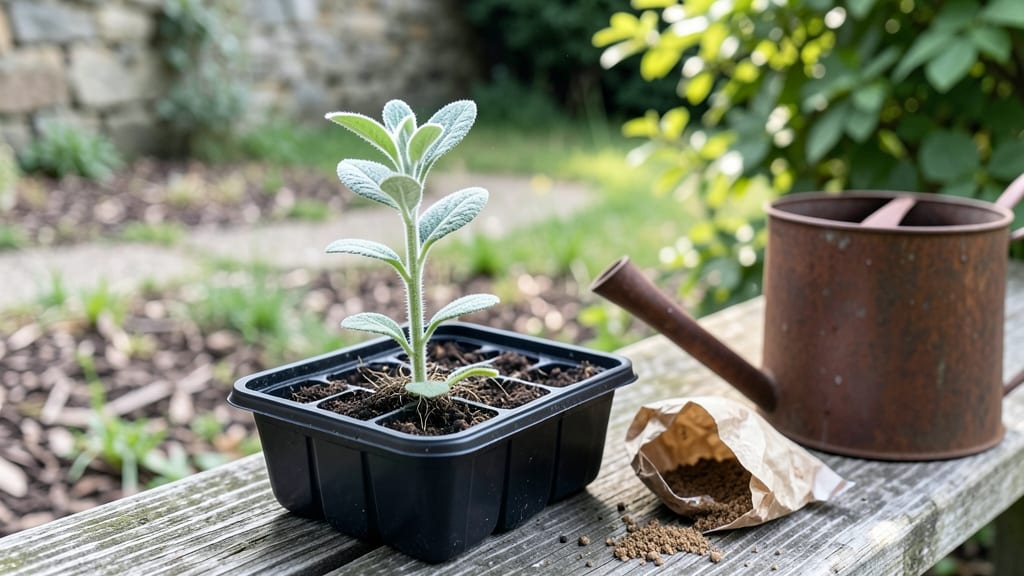
Mastering borage seedling identification early prevents you from yanking them out by mistake—those iconic blue flowers won’t bloom for months. The first clue is the leaves: tiny, rounded, and slightly hairy, with a soft green that’s almost too delicate to believe.
They grow in a rosette pattern close to the ground, and the stems are still so thin you could snap them with a fingernail.
Here’s where most gardeners stumble: confusing borage with chickweed or purslane. Borage’s true leaves stay smooth-edged and slightly wrinkled, while weeds often have jagged edges or sticky stems.
The secret weapon? Look for the faint blue-green tint on the underside of leaves—it’s subtle but unmistakable once you know what to spot.
By the time they’re 2–3 inches tall, you’ll see the classic star-shaped leaves emerging, but the real confidence booster comes when you find that first hairy stem.
Borage seedlings grow fast once they take hold, so catching them early means you’ll have a head start on those striking blue blooms by summer.
Pro tip: Snap a photo of your first few seedlings and compare it to your garden’s weeds—you’ll spot the difference every time after that. The earlier you recognize them, the sooner you can give them space to thrive without competition.
Common Mistakes in Seedling Spotting
Identifying borage seedlings can be tricky, especially for beginners or those unfamiliar with its early growth stages. Misidentification often stems from a few key factors—let’s break down why it happens and how to avoid these pitfalls.
Borage (Borago officinalis) seedlings can easily be mistaken for other fast-growing annuals or weeds, particularly in early stages. Common culprits include:
- Chickweed (Stellaria media): Tiny, oval leaves with a smooth edge and a delicate, sprawling habit—similar to borage’s first sprouts but much finer.
- Purslane (Portulaca oleracea): Succulent, thick leaves with a reddish tint, often growing in dense mats. Borage’s leaves are hairier and more triangular.
- Lamb’s Quarters (Chenopodium album): Young leaves resemble borage’s but lack the fuzzy texture and grow on a more upright, branching stem.
Why it happens: Borage seedlings start with small, rounded leaves that can resemble other broadleaf weeds. Without close inspection, their stellate (star-shaped) hairs and slightly hairy stems are easy to overlook.
Actionable fix: Wait until seedlings develop 3–4 true leaves (not cotyledons) and check for:
- ✅ Hairy stems and leaves (use a magnifying glass if needed).
- ✅ Alternate leaf arrangement (not opposite like mint or basil).
- ✅ Slightly rough, sandpapery texture on leaves.
Borage goes through distinct phases, and missing early clues can lead to misidentification. Here’s what often gets missed:
🔍 Stage 1: Cotyledons vs. True Leaves
Newborn borage seedlings first produce cotyledons (seed leaves), which are:
- ✔️ Round and smooth (resembling a tiny shield).
- ✔️ Lack the fuzzy texture of mature leaves.
Why it happens: Many gardeners mistake these for weeds or assume they’ve failed to sprout. Cotyledons do not look like adult borage leaves, leading to premature discard.
Actionable fix: Wait for true leaves (the second set) to emerge—these will have the distinctive hairiness and lobed, triangular shape.
🌿 Stage 2: Leaf Shape Evolution
Borage leaves start small and oval but quickly develop into:
- 🔹 Roughly triangular with 3–5 shallow lobes.
- 🔹 Covered in star-shaped hairs (visible under light).
- 🔹 Alternate arrangement along the stem.
Why it happens: If you check seedlings too early, you might see only the initial smooth leaves and assume they’re a different plant. Borage’s leaf morphology changes rapidly in the first 2–3 weeks.
Actionable fix: Monitor seedlings daily. By Day 10–14, true leaves should show the hairy, lobed pattern.
Poor growing conditions can alter borage’s appearance, making identification harder. Common stressors include:
💧 Water Issues (Over/Under)
Both overwatering and drought can stunt growth or cause leaf distortion:
- Too much water: Leaves may appear yellowish or mushy, hiding their natural texture.
- Too little water: Leaves can curl or shrink, losing their lobed shape.
Why it happens: Stress triggers physiological changes that suppress borage’s signature traits. For example, underwatered seedlings may look like dwarfed chickweed.
Actionable fix: Keep soil consistently moist but not soggy. Use a soil moisture meter if unsure.
☀️ Light Conditions
Low light can cause:
- ⚠️ Pale, stretched stems (etiolation).
- ⚠️ Smaller, less lobed leaves.
Why it happens: Borage is a sun-loving plant (full sun, 6+ hours/day). Shade slows photosynthesis, leading to underdeveloped traits.
Actionable fix: Place seedlings in bright, indirect light initially, then gradually introduce direct sun to harden them.
Pro Tip: 💡 Use a UV flashlight at night to check for stellate hairs—they’ll glow faintly under UV, confirming borage even in low light.
Quick Fixes for Common Seedling Struggles
Identifying borage seedlings correctly is just the first step—keeping them thriving requires addressing potential issues before they spiral. Below are practical, step-by-step solutions tailored to the most common problems, from misidentification to growth setbacks, along with prevention tips to avoid future headaches.
If you’ve accidentally planted something else (like comfrey or forget-me-nots), don’t panic—correcting the mix-up is easier than you think.
How to Fix It
🔥 Step 1: Dig Up and Inspect Carefully pull the seedling (or a few) and examine: - Leaves: Borage has rough, hairy, oval-shaped leaves with saw-toothed edges.
Non-borage plants (like comfrey) often have smoother, broader leaves or whorled arrangements. - Stems: Borage stems are hairy and slightly square, while impostors (e.g., forget-me-nots) have thin, round stems. - Flowers (if present): Borage blooms have star-shaped, bright blue flowers with five petals.
Compare to a trusted borage reference (like this guide).
🍳 Step 2: Transplant or Remove
- If it’s borage: Replant in well-draining soil with full sun (6+ hours daily).
- If it’s an imposter: Remove it entirely to avoid cross-pollination or unwanted spread.
👨🍳 Step 3: Test Soil Conditions Borage thrives in sandy, slightly alkaline soil (pH 6.0–7.5). If your soil is too dense or acidic:
- Amend with compost or perlite to improve drainage.
- Add wood ash (sparingly) to raise pH if needed.
Slow or weak seedlings often stem from poor soil, overcrowding, or environmental stress. Here’s how to revive them.
How to Fix It
💡 Check the Soil First
- Too wet? Borage hates soggy roots. Ensure pots/containers have drainage holes and avoid overwatering.
- Too dry? Water deeply once a week (or when the top inch of soil feels dry). Use a moisture meter for accuracy.
🔥 Thin Out Crowded Seedlings
- Problem: Overcrowding competes for nutrients.
- Fix: Snip seedlings at soil level, leaving 2–3 inches between plants. Use the thinned sprouts in salads or teas!
🌡️ Boost with Fertilizer (Gently) Borage is light on nutrients—over-fertilizing can harm it. Instead:
- Use a balanced, organic fertilizer (like 5-5-5) once a month during growth.
- Avoid high-nitrogen feeds (they promote leafy growth over flowers).
Borage is generally pest-resistant, but aphids, slugs, or fungal issues can still strike. Act fast to save your plants.
How to Fix It 🔪 Pests: Aphids or Slugs?
- Aphids: Tiny green/black bugs on leaves? Spray with soapy water (1 tsp mild soap + 1 quart water) or introduce ladybugs.
- Slugs/Snails: Check for silver slime trails at night.
Set up beer traps (bury a cup filled with beer) or use copper tape around pots.
🌡️ Fungal Issues: Powdery Mildew or Rot?
- Signs: White powder on leaves or mushy stems.
- Fix:
- Improve airflow by spacing plants wider.
- Spray with neem oil (1 tsp + 1 quart water) weekly for prevention.
- Remove infected leaves immediately.
Once you’ve fixed the issue, proactive care ensures your borage seedlings grow strong.
✨ Start Indoors (If Needed)
- When to sow: 4–6 weeks before the last frost.
- Use seed trays with sterilized soil to prevent damping-off disease.
- Keep warm (70–75°F) until germination (5–10 days).
🎯 Direct Sowing Tips
- Plant depth: ¼ inch deep, 12–18 inches apart.
- Sunlight: Full sun is a must—partial shade slows growth.
- Mulch lightly with straw to retain moisture without suffocating roots.
💪 Harvest Smartly
- Pinch back flowers to encourage leafy growth (or let them bloom for pollinators).
- Harvest leaves early (before flowering) for the most tender texture.
| Issue | Cause | Solution | Prevention |
|---|---|---|---|
| Wrong plant | Misidentification | Dig up, compare leaves/stems, replant | Study borage traits before sowing |
| Stunted growth | Poor soil, overcrowding | Thin seedlings, amend soil, water deeply | Test soil pH, space plants properly |
| Pest damage | Aphids, slugs | Soapy water, beer traps, copper tape | Encourage beneficial insects |
| Fungal disease | High humidity, poor airflow | Neem oil spray, improve spacing | Mulch lightly, avoid wetting leaves |
Pro Tip: 🌱 Label your seedlings with small sticks or tags as soon as they sprout—this saves time (and frustration) later!
Frequently asked questions
How can I tell if a tiny sprout is a borage seedling or a weed?
Look for hairy stems and slightly fuzzy leaves—borage seedlings have these even at 1 inch tall. Weeds like chickweed have smooth, delicate leaves without texture. Use a magnifying glass to spot the stellate (star-shaped) hairs on borage leaves.
What do borage seedlings look like at 2 weeks old?
At this stage, they’ll have 3–4 true leaves (not cotyledons) that are triangular with shallow lobes and a rough, sandpapery texture. The stems remain thin but slightly square-shaped. Compare to photos of mature borage to confirm.
Can I identify borage seedlings by smell?
No—young seedlings don’t have the characteristic cucumber-like aroma until they mature. Focus on visual cues like hairy stems, lobed leaves, and alternate leaf arrangement instead. Crush a leaf between your fingers to check for the faint scent once they’re larger.
Why do my borage seedlings look like chickweed?
This happens because both have small, smooth leaves early on. The key difference: borage’s true leaves develop fuzzy texture and lobes by Day 10–14, while chickweed stays smooth and sprawling. Wait until seedlings are 2–3 inches tall for clearer identification.