Trees
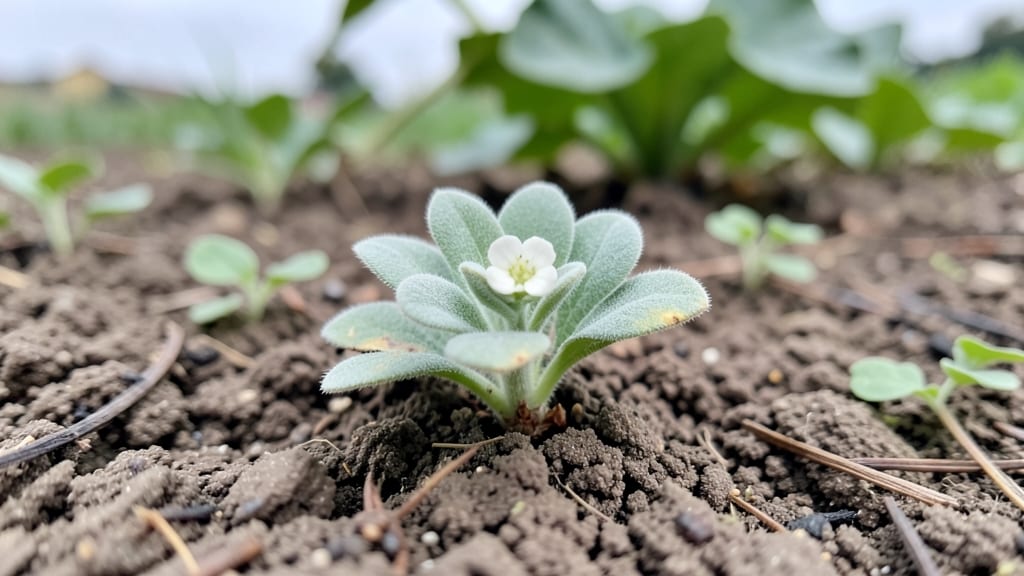
Mastering alyssum seedling identification early means you’ll never mistake those fuzzy little leaves for weeds—because those are your future fragrant ground cover gems. 🌱 The moment you spot their tiny, rounded leaves, you’ve found your seedlings. not mustard or other volunteers.
These leaves grow in neat pairs right at the stem, forming a perfect little "V" shape that's unmistakable once you know what to look for.
Here's the game-changer: alyssum seedlings start out a vibrant emerald green, but don't let that fool you into thinking they're just another fast-growing weed. Their growth is slow and deliberate at first, with stems staying close to the soil—unlike mustard weeds, which shoot up like rocket fuel.
The key is checking for that fuzzy leaf texture and the paired arrangement, which appears within the first 2-3 weeks of germination.
Once you confirm those fuzzy little leaves, give them bright but indirect light and keep the soil barely moist—not soggy. Within 4-6 weeks, you'll see those signature clusters of tiny white or purple flowers forming, proving you've got the real deal.
The earlier you spot them, the sooner you can transplant them to their final spot before they get crowded out.
Confusion happens most often with mustard weeds, which have smooth leaves and grow in a rosette pattern. Alyssum's fuzzy texture and paired leaves are your best friends for telling them apart.
With these traits in mind, you'll never mistake one for the other again—and your garden's sweet fragrance will thank you.
Common Causes Of Misidentification
When it comes to alyssum seedling identification, mistakes often happen due to subtle but critical differences in plant morphology, environmental factors, or even human error. Understanding these root causes can help gardeners and horticulturists spot seedlings accurately and avoid costly mix-ups.
Below, we break down the most frequent reasons why identification fails—and how to address them.
Many early-stage seedlings share striking similarities, especially in the Alyssum family (Lobularia spp.) and related cruciferous plants like Arabis or Hesperis. Here’s why confusion arises:
- Leaf Shape & Arrangement:
Alyssum seedlings often have round, spoon-shaped cotyledons (first leaves) and later develop small, oval true leaves in a rosette pattern. However, Arabis (rock cress) seedlings can mimic this with hairy, lobed leaves or a slightly more elongated shape. Hesperis (sweet rocket) may also start with rounded leaves but develop a more toothed or serrated edge as they mature.
- 🔍 Actionable Tip: Examine the leaf margins under magnification. Alyssum leaves are typically smooth and slightly fleshy, while Arabis leaves may have tiny hairs or a waxy coating.
- Stem & Growth Habit:
Alyssum seedlings grow in a low, trailing, or bushy pattern, while Hesperis tends to be more upright and stemmy early on. Misidentifying a taller, single-stemmed seedling as Alyssum is common if you’re not checking the overall plant architecture.
- 💡 Pro Tip: Compare seedlings side by side with a reference chart of Alyssum varieties (e.g., Alyssum maritimum vs. Alyssum saxatile) to spot differences in stem thickness and leaf density.
Seedlings under suboptimal conditions (e.g., poor light, temperature swings, or nutrient deficiencies) may develop stunted, deformed, or atypical traits, making identification harder. Key stress factors include:
| Stress Factor | How It Affects Alyssum Seedlings | What to Watch For |
|---|---|---|
| Low Light | Seedlings stretch (etiolation) toward light, producing long, weak stems and pale, larger leaves. | Leggy seedlings with yellowing cotyledons may resemble damaged or diseased plants. |
| Temperature Fluctuations | Cold snaps can cause delayed germination or purple-tinged leaves (anthocyanin buildup). Heat stress may lead to crinkled or curled leaves. | Seedlings may look smaller or more compact than expected, mimicking slow-growing weeds. |
| Nutrient Deficiencies |
|
Misidentified as diseased seedlings or non-Alyssum species. |
- ✨ Solution: Maintain consistent growing conditions (e.g., 60–75°F for germination, bright indirect light) and use a balanced starter fertilizer (e.g., 5-5-5 NPK) to prevent stress-related deformities.
Even experienced gardeners can misidentify seedlings due to rushed judgments, lack of reference materials, or focusing on the wrong traits. Common pitfalls include:
- Ignoring Root Structure:
Alyssum seedlings develop a fibrous, shallow root system, while weeds like shepherd’s purse (Capsella bursa-pastoris) have a tapered, taproot. Many skip checking roots, assuming all small seedlings are the same.
- 🔥 Step: Gently unpot or dig up 1–2 seedlings to inspect roots if identification is unclear.
- Focusing Only on Flowers (Too Late!):
Alyssum’s fragrant white/purple flowers are iconic, but seedlings won’t bloom for 6–8 weeks. Relying on flower color to ID seedlings is like judging a tree by its fruit—it’s too late by then.
- 🎯 Fix: Train yourself to ID seedlings by cotyledons, leaf shape, and growth habit before flowering.
- Confusing Seedling vs. Volunteer Plants:
Alyssum can self-seed aggressively, leading to unplanned "volunteers" that look identical to cultivated seedlings. However, volunteers may be smaller, slower-growing, or less uniform due to variable germination times.
- 🌡️ Quick Test: Compare seedling size consistency. Direct-sown Alyssum seedlings should be uniform in height and color if planted at the same time.
By recognizing these common causes, you’ll sharpen your alyssum seedling identification skills and reduce the risk of discarding or mislabeling your plants. Next, we’ll cover pro tips for accurate field identification—stay tuned!
Quick Fixes for Seedling Confusion
Identifying alyssum seedlings early can be tricky, especially if they resemble other plants or weeds. The good news? With the right steps, you can quickly confirm what you’re dealing with—and prevent future mix-ups. Below, we break down common issues and their solutions, from misidentification to environmental stress.
If your seedlings resemble weeds or other flowers, start with a close-up inspection.
🔥 Step 1: Check Leaf Shape & Arrangement
Most alyssum seedlings have small, rounded leaves arranged in a rosette pattern (close to the stem). If they look more lance-shaped or serrated, they might be a different plant.
- Fix: Compare with a reference image of mature alyssum leaves.
- Prevent: Label seedlings immediately after germination to avoid confusion.
🌱 Step 2: Observe Growth Habit
Alyssum seedlings grow low to the ground and form dense mats. If they’re tall and spindly, they may be mustard weeds or wild radish.
- Fix: Thin seedlings early to encourage bushier growth.
- Prevent: Plant in well-draining soil to discourage leggy weeds.
If your alyssum seedlings are yellowing, wilting, or stunted, environmental factors are likely the culprit.
💧 Step 1: Rule Out Over/Underwatering
Alyssum prefers consistent moisture but hates soggy soil. Yellow leaves? Check drainage.
- Fix:
- If soil is dry: Water gently at the base (avoid wetting leaves).
- If soil is waterlogged: Repot in a mix with perlite or sand.
- Prevent: Use containers with drainage holes and mulch to retain moisture.
☀️ Step 2: Adjust Light Exposure
Too much sun causes bleaching, while too little leads to weak, elongated stems.
- Fix:
- For sunburn: Move seedlings to partial shade (4–6 hours of sunlight/day).
- For leggy growth: Place under grow lights (12–14 hours/day).
- Prevent: Start seedlings indoors under bright, indirect light before transplanting.
Chewed leaves or black spots? Pests or fungal issues may be at play.
🐜 Step 1: Identify the Problem
Common culprits include aphids, slugs, or powdery mildew. Inspect the undersides of leaves and stems.
- Fix:
Issue Solution Aphids (tiny green/black bugs) Spray with soapy water (1 tsp mild soap per quart of water) or introduce ladybugs. Slugs (silver slime trails) Set up beer traps or use diatomaceous earth around the base. Powdery mildew (white fuzzy coating) Remove affected leaves and treat with baking soda spray (1 tsp baking soda + 1 quart water + drop of soap). - Prevent:
- Keep plants well-spaced for airflow.
- Water in the morning to reduce humidity at night.
Once you’ve confirmed your seedlings, keep them thriving with these easy habits:
- 🌱 Label early: Use toothpicks with plant names to avoid future guesswork.
- 📏 Monitor growth: Alyssum should reach 6–12 inches tall. If slower, check soil nutrients (add a balanced fertilizer lightly).
- 🌿 Prune regularly: Pinch back leggy stems to encourage fuller blooms.
- 🔄 Rotate crops: If replanting, avoid the same spot yearly to prevent soil-borne diseases.
With these fixes, your alyssum seedlings will grow strong, recognizable, and pest-free—no more second-guessing! For extra confidence, snap a photo and compare it to a reliable plant database like Gardenia or PlantNet.
Frequently asked questions
How do I tell if tiny fuzzy seedlings are actually alyssum?
Look for paired, spoon-shaped leaves growing in a rosette pattern close to the stem. True alyssum seedlings have a velvety texture and vibrant emerald green color—unlike smooth-leaved weeds. Check for this within 2-3 weeks after germination before they develop true leaves.
Why do my alyssum seedlings look like weeds?
Mustard weeds and young alyssum can resemble each other, but alyssum stays low to the ground with fuzzy leaves, while weeds grow taller and smoother. The key difference is alyssum's paired leaf arrangement and slower growth rate—weeds shoot up like rockets!
When will my alyssum seedlings start flowering?
With proper care, you'll see those signature tiny white or purple flower clusters within 4-6 weeks of germination. The earlier you identify them correctly, the sooner you can transplant them to their final spot before they get crowded out.
Can I transplant alyssum seedlings too early?
Wait until seedlings have 2-3 sets of true leaves and are at least 2 inches tall. Transplanting too early stresses delicate roots. Harden them off first by placing outdoors for 1-2 hours daily before full transplant.
What's the best way to store alyssum seeds for next year?
Keep seeds in a cool, dry place (like a sealed envelope in the fridge) for up to 2 years. For best results, harvest seeds from fully mature pods after they turn brown and dry on the plant. Store in paper envelopes to prevent moisture buildup.