Trees
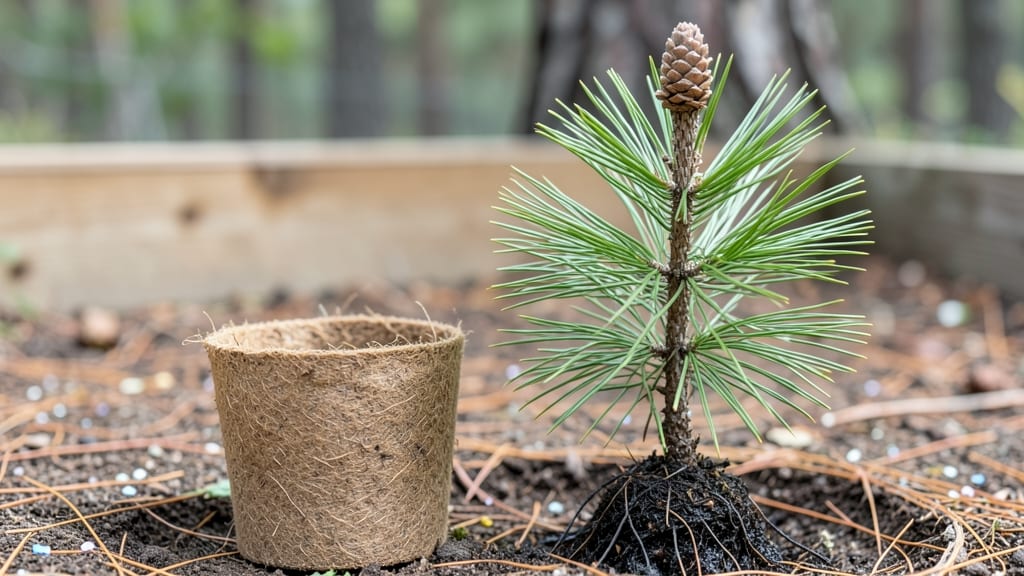
Growing a pine cone seedling starts with cold stratification for 3-4 months to break seed dormancy, followed by planting in well-draining, slightly acidic soil with bright but indirect light. Germination can take weeks to months, and early growth is slow but steady.
Cold stratification mimics winter conditions by exposing seeds to moisture and 35-40°F temperatures—think of it as tricking the seed into thinking it's survived a natural winter. 🌲 I've found using damp sand or peat moss in a sealed container works best, and you'll know it's ready when tiny roots appear after about 8-12 weeks.
The key here is consistency: keep the mix moist but not soggy, and avoid letting it dry out completely.
Once sprouted, young pine seedlings thrive in sandy, acidic soil (pH 4.5-6.0) with partial shade to prevent stress. A 6-inch pot with drainage holes is ideal for the first year, and I recommend watering only when the top inch of soil feels dry—overwatering is the #1 killer of new seedlings.
Patience is truly everything; some varieties take up to 18 months just to reach 6 inches tall.
💡 In This Article
- Pine Cone Stratification Process Explained
- Optimal Soil and Light Conditions for Young Pine Seedlings
Pine cone stratification process explained
Cold stratification is essentially a controlled winter simulation for pine seeds. In nature, pine cones release seeds only after exposure to freezing temperatures and moisture, which breaks their natural dormancy.
This process triggers internal chemical changes—specifically, the breakdown of growth-inhibiting hormones like abscisic acid—while allowing water to penetrate the seed coat. For home growers, this means maintaining a 35-40°F environment with consistent moisture for 3-4 months to replicate these conditions.
The moisture component is critical: too little and the seed won't soften, too much and it risks rotting. I recommend mixing pine seeds with damp sand or peat moss (about 50% moisture by volume) in a sealed container.
Think of it like a mini greenhouse where condensation forms on the sides—this visual cue confirms you've hit the right humidity. Some growers even use refrigerators set to 38°F, but avoid temperature fluctuations above 5°F—these can shock the seeds and delay germination.
What most people don't realize is that stratification also hardens the seedling's resilience. The cold period forces the seed to develop a stronger root system before sprouting, which is why stratified seeds often germinate at a 20-30% higher rate than unstratified ones.
For example, white pine seeds typically show 5-10% germination without stratification, but that jumps to 40-60% after proper cold treatment. The trade-off? This process can take 8-12 weeks—patience here prevents disappointment later.
Materials matter too. While peat moss is ideal for moisture retention, it can compact over time. A 50/50 mix of sand and peat offers better aeration, which prevents fungal growth—a common issue in tightly sealed containers.
I've found that placing the container in a clear plastic bag with small air holes creates a self-regulating microclimate. Check moisture weekly by squeezing a handful: it should feel like a damp sponge, not a dripping towel. If condensation stops forming, it's time to add a little water.
Here's what's actually happening at the cellular level: cold stratification activates enzymes that convert stored starches into sugars, fueling early root growth. The seed's embryo responds to these chemical signals by producing auxin hormones, which trigger cell division.
This is why you'll often see a tiny white root emerge first—it's the seed's way of "testing" its environment before committing to full germination.
Some pine varieties, like the Pinus strobus (white pine), require up to 90 days of cold treatment, while others like Pinus sylvestris (Scots pine) may need only 60 days.
Once you see those first roots (1/4-inch to 1/2-inch long), it's time to plant. But don't rush—wait until roots reach about 1/2-inch before transplanting to minimize shock. The stratification process isn't just about breaking dormancy; it's about preparing the seedling for the real world. 🌱