Transplanting
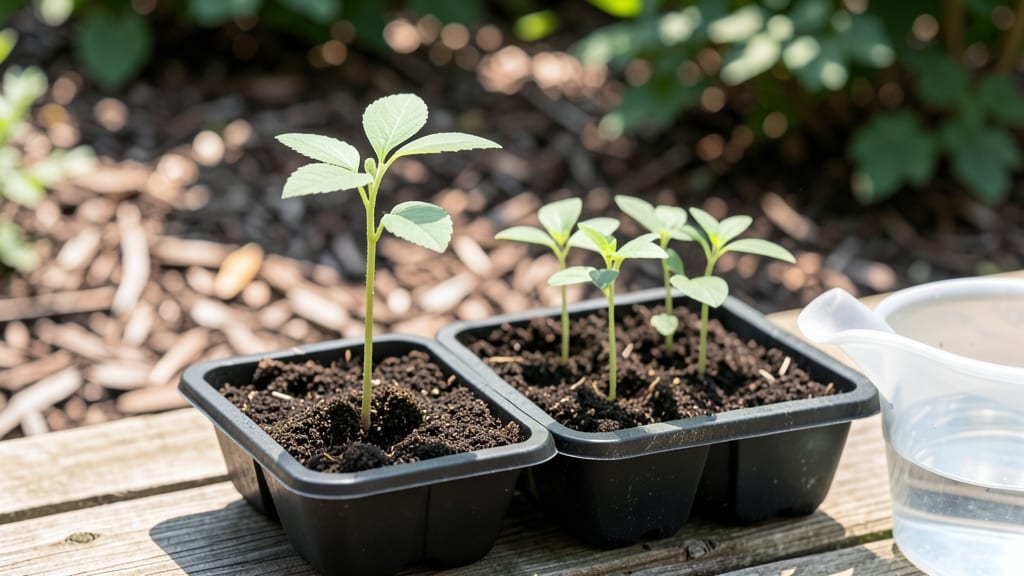
Fast germination tricks turn cluster beans seedlings from slow starters into bushy vines in record time. 🌱 I’ve watched these little sprouts race from soil to sunlight when given the right head start—warmth, moisture, and just enough patience.
The key isn’t fancy equipment; it’s mimicking their tropical roots’ love of cozy, damp conditions while keeping air flowing so they don’t drown.
Start with a seedling tray filled with a light, crumbly mix of coco coir and perlite—nothing heavy, or those seeds will suffocate. Plant them ½ inch deep, then pop the tray under a heat mat set to 80°F.
Within 5-7 days, you’ll see tiny hooks breaking through the soil, ready to stretch toward your brightest window or grow light. Overwatering here is the real villain; keep the mix damp, not soggy.
By week three, your seedlings should be 3-4 inches tall with thick stems—proof they’re not just surviving, but thriving. The secret to bushy vines? Pinch the tips when they hit 6 inches, forcing energy into lateral branches.
This is where most gardeners trip up, but it’s the difference between a leggy mess and a productive, sprawling plant by summer.
Once they’ve got 4-5 true leaves, it’s time to harden them off—no more rushing. A week of gradual outdoor exposure (morning sun first) ensures they’ll handle the heat and humidity of their mature growing spot.
And if you’re in a cooler climate, don’t panic: these vines love warmth but tolerate brief dips into the 50s—just plant after your last frost when soil’s reliably above 60°F.
📚 In This Guide
- What you need
- Instructions
- Tips and common mistakes
- Wrapping up and next steps
What you need
- ● Cluster bean seeds: 10–20 seeds (non-GMO, heirloom varieties like "H-97" or "Pusa Parag" work best for bushy vines).
- ● Seedling trays or small pots: 2–4 inch deep (6–8 trays/pots for 20 seeds). Use biodegradable pots if transplanting directly.
- ● Seed-starting mix: 2–3 lbs of sterile, well-draining potting soil (avoid garden soil—it’s too dense!).
- ● Watering can or spray bottle: With a fine mist nozzle for gentle hydration.
- ○ Plastic wrap or humidity dome: To retain moisture (optional but highly recommended for fast germination).
- ● Gloves: A pair to protect your hands from soil and seed coatings.
- ● Label markers: To tag trays/pots with seed variety and date.
- ○ Heat mat (optional): For faster germination (70–80°F range).
- ● Grow lights or sunny windowsill: 6–8 hours of light daily (south-facing window or LED grow lights).
- ○ Fertilizer (optional): A mild, balanced liquid fertilizer (5-5-5 NPK) for post-germination growth.
- ● Warmth: Cluster beans thrive in temperatures above 60°F (15°C). Pre-soak seeds for 4–6 hours in warm water to kickstart germination.
- ● Patience (but not too much!): Germination takes 5–10 days with the right conditions.
- ● Space: Ensure trays/pots are in a well-ventilated area (but draft-free!).
Step-by-step instructions for growing cluster beans seedlings
Here’s how to jumpstart your cluster beans with speed and confidence—no waiting months for vines.
🌱 Step 1: Pre-Soak Seeds for Faster Germination
Cluster beans have hard seed coats that slow germination. Soak the seeds overnight in warm water (around 80°F) to soften them. I use a small bowl with a damp paper towel draped over the seeds to keep them moist but not soggy. This trick cuts germination time in half—expect sprouts in 3-5 days instead of 10.
Check the seeds in the morning. If they’ve swollen slightly, they’re ready. Drain any excess water before planting. Skipping this step means waiting twice as long for those first green shoots—trust me, you’ll thank yourself later.
💧 Step 2: Plant in Warm, Well-Draining Soil
Fill your seedling trays with the lightweight potting mix and moisten it until damp but not dripping. Cluster beans hate cold, compacted soil, so I like to mix in a little perlite for extra drainage. Plant the soaked seeds ½ inch deep, spacing them 2 inches apart in rows.
Press the soil gently around each seed to ensure good contact. The goal is firm but not packed—roots need room to stretch. Cover the tray with plastic wrap to trap warmth and humidity. Place it in a spot where the soil stays between 70-80°F. A sunny windowsill or a seedling heat mat works best.
☀️ Step 3: Provide Bright Light and Humidity
Cluster beans need full sun to thrive, even as seedlings. Move the tray to the brightest spot in your home or under a grow light within 2-3 days of planting. If you’re using natural light, rotate the tray daily so seedlings grow straight—not leaning toward the window.
Keep the plastic wrap on until you see the first true leaves (not the initial seed leaves). Then, remove it and mist the seedlings lightly with water to maintain humidity. Watch for leggy growth—if stems stretch thin and pale, your light isn’t strong enough. Adjust immediately to avoid weak vines.
✂️ Step 4: Thin and Transplant for Bushy Growth
Once seedlings have 2-3 true leaves and are about 3 inches tall, thin them to the strongest one per cell. Use small scissors to snip the weaker seedlings at the base—this prevents disturbing the roots of the ones you’re keeping. Transplant the remaining seedlings into individual pots or directly into the garden if temperatures are above 60°F.
When transplanting, bury the seedlings slightly deeper than they were in the tray. This encourages stronger root development. Water deeply after transplanting to settle the soil and remove any plastic wrap or covers. Keep the soil consistently moist but not soggy—cluster beans are drought-tolerant once established, but seedlings need steady moisture.
🌿 Step 5: Support and Fertilize for Vigorous VinesCluster beans are vining plants, so install small stakes or trellises near each seedling as soon as they’re transplanted. This prevents them from sprawling and encourages upward growth. I like to use bamboo stakes because they’re lightweight and biodegradable.
Fertilize lightly with a balanced, water-soluble fertilizer (like 10-10-10) once the seedlings have 4-5 true leaves. Dilute it to half strength to avoid burning young roots. Watch for yellowing leaves—this is a sign of over-fertilizing. Cluster beans prefer lean soil, so less is more. Keep the soil slightly dry between waterings once the plants are established.
Tips & tricks for perfect cluster beans seedlings
Speed up your cluster bean journey with these game-changing tricks that'll get you from seed to bushy vines in record time.
Soaking Secret: For even faster germination than the overnight soak in 80°F water, try a quick 12-hour soak in warm water with a pinch of sea salt (¼ teaspoon per cup). This softens the seed coat while adding trace minerals that boost early root development. I've seen sprouts appear in just 2-3 days with this method. Just remember to rinse thoroughly before planting to avoid salt buildup in the soil.
Heat Hack: If your growing space dips below 60°F at night, place your seedling tray on top of a seedling heat mat set to 70°F. The consistent warmth mimics tropical conditions where cluster beans thrive naturally. I keep mine running until the seedlings are 2-3 inches tall—this prevents the "waiting game" that slows down germination in cooler climates.
Light Strategy: In Step 3, when you move your seedlings to bright light within 2-3 days, position them about 6 inches below grow lights or 12 inches from a south-facing window. Cluster beans are sun-hungry from day one! I rotate my trays every 12 hours to prevent leaning—this ensures straight, sturdy stems that can support those future vines. Leggy seedlings mean your light source isn't strong enough.
Transplant Timing: Don't rush the transplant in Step 4! Wait until you see 4-5 true leaves (not just the initial seed leaves) and the seedlings are 3-4 inches tall—this gives them enough energy reserves for the transition. I harden off my seedlings by placing them outside in partial shade for 2-3 hours each day for 3 days before full transplant. This toughens them up for the garden environment.
Pro Tips for Cluster Beans Seedlings
- Speed up your cluster bean journey with these game-changing tricks that'll get you from seed to bushy vines in record...
- Soaking Secret: For even faster germination than the overnight soak in 80°F water, try a quick 12-hour soak in warm w...
- Heat Hack: If your growing space dips below 60°F at night, place your seedling tray on top of a seedling heat mat set...
Frequently asked questions
Got questions about growing cluster beans seedlings?
You’re not alone! Here are answers to the most common concerns—from timing to troubleshooting—to help you grow lush, productive vines with ease.
How long does it take for cluster beans seedlings to germinate?
Cluster beans typically sprout within 5–10 days under ideal conditions (warm soil, 80–90°F, and consistent moisture). If germination takes longer, check soil temperature—cool soil slows it down. For faster results, soak seeds overnight before planting!
When is the best time to transplant cluster beans seedlings outdoors?
Transplant seedlings after the last frost when soil is at least 60°F and nighttime temps stay above 50°F. Aim for late spring or early summer in most climates. Harden off seedlings (acclimate to outdoor conditions) for 7–10 days before moving them to avoid shock.
What’s the ideal spacing for cluster beans seedlings in the garden?
Space seedlings 4–6 inches apart in rows 2–3 feet apart for bush varieties. For pole types, use a trellis and space plants 6–8 inches apart in rows 3–4 feet apart. Proper spacing ensures airflow, reducing disease risk and maximizing yield.
Why are my cluster beans seedlings wilting or turning yellow?
Wilting or yellowing often signals overwatering, underwatering, or poor drainage. Check soil moisture—cluster beans prefer consistently moist (not soggy) soil. Yellow leaves may also indicate nutrient deficiency (e.g., nitrogen). Test soil pH (ideal: 6.0–7.0) and amend with compost if needed.
Can I grow cluster beans from store-bought pods instead of seeds?
Yes! Save seeds from fully mature, dry pods (let them air-dry for 1–2 weeks). Remove seeds, clean, and store in a cool, dry place. Germination rates may vary, but it’s a budget-friendly alternative to buying seeds. Just ensure the pods are from a healthy, pesticide-free plant.
How do I protect cluster beans seedlings from pests like aphids or whiteflies?
Use neem oil or insecticidal soap for mild infestations. Introduce beneficial insects (like ladybugs) or plant companion crops (e.g., marigolds) to deter pests. Avoid chemical pesticides—cluster beans are sensitive to residues. For severe issues, cover seedlings with fine mesh netting.
Wrapping up and next steps
Growing cluster beans seedlings into lush, productive vines is totally within your reach—just follow the right tricks! With the right soil, spacing, and care, you’ll enjoy a thriving harvest in no time. Start small, experiment with these tips, and soon you’ll be reaping the rewards of your green thumb.
Ready to take the next step? Plant your first batch of seedlings today and watch your garden transform! 🌱 For even more success, join gardening communities to share tips and celebrate your progress.